
AI surgical planning in 2026 is transforming how surgeons approach complex procedures and patient care.
From autonomous robotic systems performing independent surgeries to machine learning algorithms predicting surgical outcomes, AI-powered surgical planning is no longer a futuristic concept but a present reality reshaping healthcare delivery worldwide.
In this blog, we’ll dive into emerging technologies, market trends, and the real-time decision tools that are reshaping modern healthcare with unprecedented precision.
🔗 iData’s latest robotics press release on MedTech Dive ->
Find growth niches in minutes, not months.
Explore quick, actionable insights from the select markets.
Table of Contents:
➜ What is AI-Powered Surgical Planning in 2026?
➜ Latest AI Surgical Planning Technologies and Tools
➜ How AI-Powered Surgical Planning Improves Patient Outcomes
➜ AI Surgical Planning Market Growth and Trends 2026
➜ Machine Learning in Surgical Planning: Applications and Benefits
➜ Robotic Surgery AI Integration: Current Capabilities
➜ Future of AI in Surgical Planning Beyond 2026
➜ Explore Comprehensive U.S. Surgical Robotics and Navigation Market Report Today
Key Takeaways
- Autonomous Surgery Reality: Robots are now performing realistic surgeries without human intervention, marking a historic milestone in surgical autonomy
- Efficiency Improvement: AI-assisted robotic surgeries demonstrate a reduction in operative time compared to traditional methods
- Complication Reduction: AI-powered surgical planning has shown a 30% decrease in intraoperative complications
- Real-Time Adaptation: Machine learning algorithms now predict tissue motion and guide surgical instruments in real-time
- Precision Enhancement: AI-driven systems merge preoperative imaging with live surgical data for unprecedented accuracy
- Market Explosion: The AI surgical planning market is experiencing exponential growth driven by technological breakthroughs and clinical adoption
- Personalized Medicine: AI enables customized surgical approaches based on individual patient anatomy and risk profiles
What is AI Surgical Planning in 2026?

In 2026, AI-Powered Surgical Planning encompasses a comprehensive ecosystem of interconnected systems that enhance every aspect of surgical care. The modern AI surgical planning framework integrates multiple sophisticated technologies.
Core Components of AI Surgical Planning:
- Advanced algorithms analyze patient data to forecast surgical outcomes and complications
- Real-time image processing during procedures for enhanced precision
- Continuous learning systems that improve surgical techniques based on accumulated data
- 3D modeling and rehearsal environments for procedure optimization
- AI-driven recommendations for surgical approaches and techniques
Revolutionary Capabilities
AI-driven intraoperative guidance changes surgical practice by merging preoperative imaging data with light-field and depth-sensor technologies, powered by artificial intelligence.
This integration allows surgeons to visualize anatomical structures in real-time with unprecedented clarity and precision.
Latest AI Surgical Planning Technologies and Tools

Recent work led by Johns Hopkins researchers has achieved robots performing unflappably across trials with the expertise of skilled human surgeons, even during unexpected scenarios typical in real-life medical emergencies.
This leap in autonomy is made possible by machine-learning algorithms based on convolutional neural networks predicting tissue motion and guide suture plans, trained using examples of motion profiles from anastomosis procedures. This level of predictive capability was unimaginable just a few years ago.
Adding to this sophistication, machine vision, coupled with AI, enables robotic systems to interpret intraoperative imagery in real-time, ensuring accurate navigation, tissue identification, and execution of surgical tasks.
Emerging AI Surgical Planning Tools:
- Intelligent Imaging Systems: Advanced computer vision for tissue identification and tumor detection
- Predictive Risk Assessment: AI models calculating personalized surgical risk scores
- Automated Instrument Guidance: Systems that autonomously control surgical instruments
- Virtual Reality Planning: Immersive 3D environments for surgical rehearsal and training
The integration of AI in surgical planning has reached such sophistication that systems can now adapt to unexpected scenarios during surgery, demonstrating problem-solving capabilities that rival experienced surgeons.
How AI-Powered Surgical Planning Improves Patient Outcomes

The clinical impact of AI-powered surgical planning is delivering measurable improvements in patient care and surgical outcomes.
Clinical Benefits
AI-assisted robotic surgery is delivering measurable improvements in both efficiency and precision. By reducing operative time and minimizing complications, these systems are streamlining workflows and enhancing patient safety.
At the same time, real-time guidance and predictive analytics help surgeons reduce human error and elevate surgical outcomes across a wide range of procedures.
📌 Related Read:
Patient-Centric Improvements:
- Reduced Recovery Time: Minimally invasive AI-guided procedures result in faster healing
- Lower Complication Rates: Predictive algorithms identify and prevent potential complications
- Personalized Treatment: AI tailors surgical approaches to individual patient anatomy
- Enhanced Safety: Real-time monitoring and decision support reduce surgical risks

Quality of Life Benefits
The precision offered by AI-powered surgical planning translates to less tissue trauma, reduced scarring, and improved long-term functional outcomes for patients across various surgical specialties.
📌 Related Read:
➜ Robotic Surgery: Minimally Invasive Procedures on the Rise
AI Surgical Planning Market Growth and Trends 2026
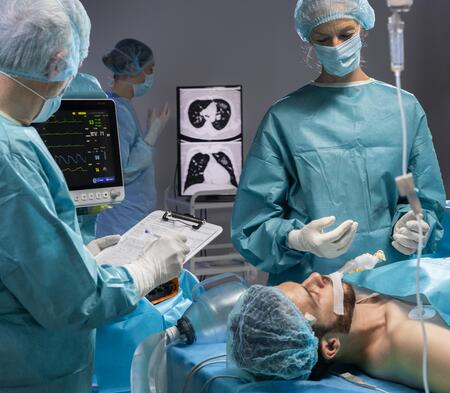
The AI surgical planning market has experienced explosive growth in 2026, driven by technological maturation and widespread clinical adoption.
AI Surgical Planning Market Dynamics
The combination of several factors has created a perfect storm for AI surgical planning adoption:
- Improved algorithm accuracy and reliability
- Enhanced computing power and processing capabilities
- Growing surgeon acceptance and training programs
- Demonstrated clinical benefits and cost savings
- Regulatory frameworks supporting AI implementation
Industry Transformation
Different types of AI technologies include machine learning algorithms, predictive analytics, artificial neural networks, cloud-based language and signal processing, data mining, and virtual simulation, each providing innovative solutions for surgical care issues.
Key AI Surgical Planning Market Drivers
- Surgeon Shortage: AI helps optimize surgical productivity and efficiency
- Cost Containment: Reduced complications and shorter procedures lower healthcare costs
- Quality Improvement: Enhanced outcomes drive hospital adoption
- Competitive Advantage: Healthcare systems differentiate through AI capabilities
The AI surgical planning market is projected to become one of the fastest-growing segments in healthcare technology.
📌 Learn More About AI Regulations in Healthcare:
➜ CHAI Regulations in Healthcare: The Future of AI in Medicine
Machine Learning in Surgical Planning: Applications and Benefits

Machine learning has become fundamental to surgical planning, enabling real-time decision support and continuous performance improvement.
Algorithms now segment medical images, automate data workflows, and extract insights from large patient datasets, streamlining clinical analysis and enhancing accuracy. These tools optimize imaging interpretation, predict complications, and assist in risk assessment across complex cases.
Specialized techniques like deep learning, reinforcement learning, NLP, and computer vision empower systems to learn optimal approaches, interpret surgical notes, and analyze intraoperative visuals with precision.
Robotic Surgery AI Integration: Current Capabilities
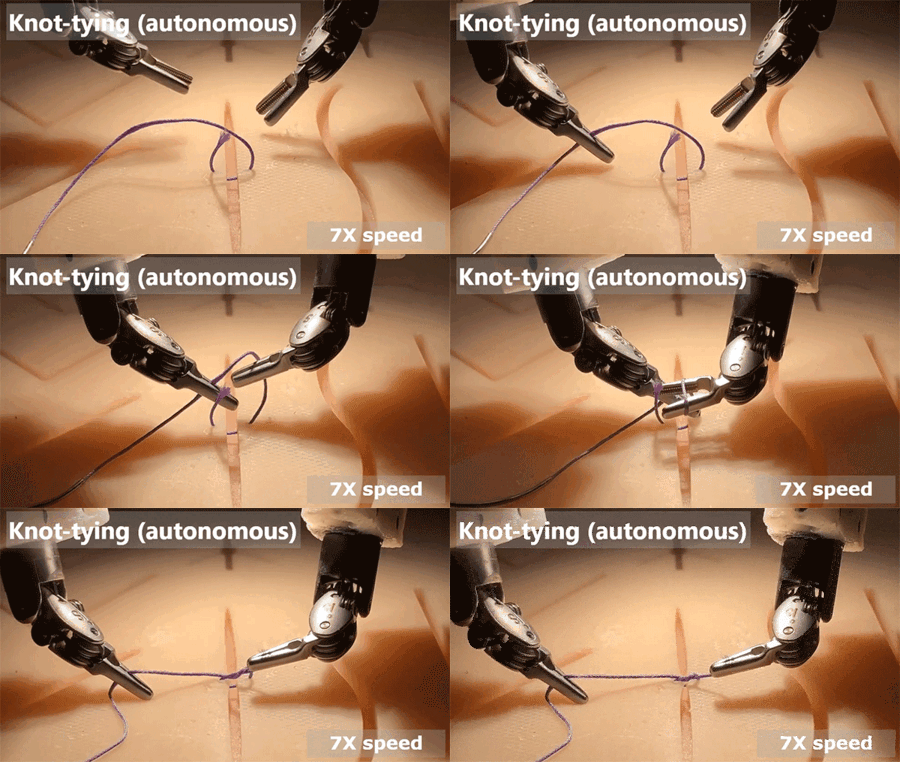
In 2026, robotic surgery systems powered by AI now deliver real-time image analysis, precision instrument control, and autonomous task execution, while surgeons retain full oversight.
Enhanced by adaptive learning, predictive maintenance, and decision support tools, these platforms are advancing collaborative and remote procedures across specialties like orthopedics, neurosurgery, and cardiac care.
Future of AI in Surgical Planning Beyond 2026

The trajectory of AI-powered surgical planning points toward even more revolutionary developments in the coming years.
AI innovation is reshaping surgery through autonomous systems and personalized digital avatars that simulate procedures with patient-specific precision.
Emerging technologies like quantum computing and augmented reality are accelerating complex planning and guiding real-time decision-making.
Turn market painpoints into opportunities
Explore how procedure trends and competitor positioning create clear openings for industry experts in the market.


