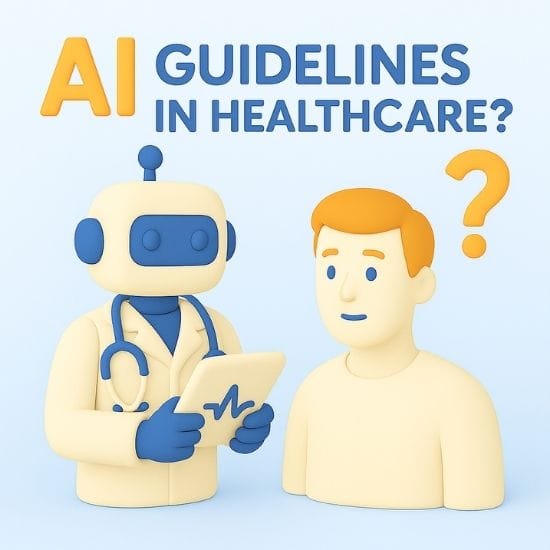
CHAI Regulations in Healthcare are designed as a framework for guiding the safe and responsible use of artificial intelligence in clinical settings.
As AI-powered tools become more common in diagnosis, triage, and treatment planning, the Coalition for Health AI (CHAI), a consortium including the Mayo Clinic, NIH, FDA, and major tech companies is leading the push for transparency, equity, and patient safety.
In this blog, we explore what CHAI regulations are, why they matter, and how they’re reshaping the future of healthcare AI adoption.
Find growth niches in minutes, not months.
Explore quick, actionable insights from the select markets.
Table of Contents
➜ What Is CHAI in Healthcare and Why Does It Matter?
↳ Why is CHAI in Healthcare important?
➜ What Are AI “Nutrition Labels” and How Do They Work?
➜ What Do CHAI Regulations Mean for Healthcare Providers?
➜ Will AI Tools Now Require FDA-Like Approval?
➜ Are Other Countries Following AI Guidelines in Healthcare?
➜ Will AI Tools Now Require FDA-Like Approval?
➜ How Will CHAI Regulations Affect Patients?
➜ What’s Next for AI Oversight in the U.S. Healthcare System?
➜ Visit iData For Latest MedTech Market Reports
Key Takeaways
- CHAI (Coalition for Health AI) is setting voluntary but widely supported guidelines to improve transparency, safety, and accountability in healthcare AI tools.
- One of CHAI’s core proposals is the introduction of AI “nutrition labels”, which disclose how, where, and on whom an AI model was tested, similar to a medical device label.
- These guidelines are expected to become a baseline for clinical AI adoption, influencing both developers and hospitals to prioritize bias mitigation, data transparency, and post-market monitoring.
- While CHAI standards are not yet law, they are closely aligned with FDA direction and may soon influence regulatory pathways, particularly for high-risk clinical AI tools.
- Healthcare providers will face growing responsibilities in AI oversight, including informed consent, clinical training, and understanding when tools are safe to use.
- Other global health systems, including those in the EU, UK, and Canada, are also developing risk-based AI regulations, indicating a global movement toward responsible AI governance.
- For patients, CHAI aims to increase trust and safety in AI-based care by ensuring transparency, preventing bias, and promoting models that are tested across diverse populations.
What Is CHAI in Healthcare and Why Does It Matter?
CHAI, short for the Coalition for Health AI, is a multi-stakeholder group made up of healthcare institutions, government agencies like the NIH and FDA, academic bodies, and private tech companies.
CHAI’s mission is to set voluntary but widely endorsed standards for how AI should be used in clinical settings.
For example, an AI model that recommends cancer treatments must be held to very different standards than an app that counts your steps.
Why is CHAI in Healthcare important?
- AI in healthcare is growing fast. It’s helping doctors spot health problems early and find rare diseases by looking at medical images.
- Many AI tools are hard to understand, and to trust.
- CHAI wants to standardize how we validate, monitor, and explain these models.
What Are AI “Nutrition Labels” and How Do They Work?
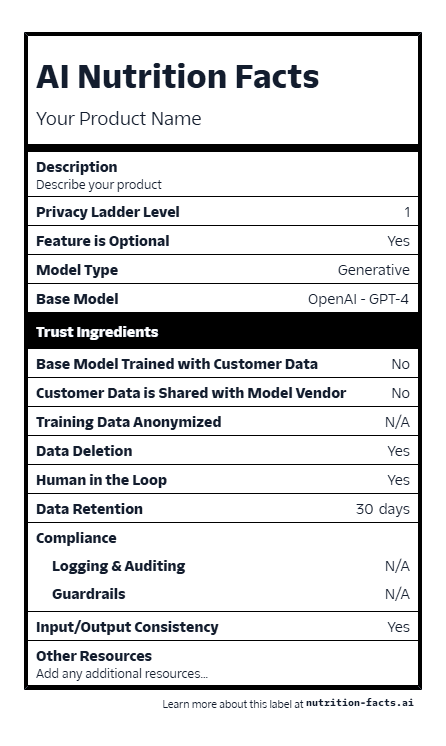
CHAI is suggesting a new way to help people understand how AI tools work in healthcare. They call it an AI “nutrition label.”
Just like the label on a cereal box tells you what’s inside – how much sugar, fiber, and protein – you’d have a label that explains what the AI model does, how it was built, and how safe or fair it is.
These labels may include:
- Intended use: For example, diagnosing skin lesions in primary care settings.
- Population tested on: Is it generalizable across age, gender, ethnicity?
- Limitations: Does it underperform in specific settings like rural clinics?
- Bias indicators: Was the model trained on biased or limited datasets?
- Performance metrics: What’s the sensitivity, specificity, or AUC?
These labels aim to give both clinicians and regulators a clearer view of how safe and effective these tools are, so they’re not blindly adopted just because they’re “AI.”
What Do CHAI Regulations Mean for Healthcare Providers?

AI tools are becoming a serious business. They’re no longer mysterious “black box” gadgets, they’re beginning to act like medical teammates. That means providers have to step up in a few key areas:
- Understanding model limitations: Providers may be held accountable for using tools outside their approved scope (e.g., applying a cardiology model in pediatrics).
- Training requirements: Clinicians may need training not just on use but also on interpretability and AI literacy.
- More robust informed consent: Especially in clinical trials or novel AI use cases, patients may need to be told how the model works, or where it doesn’t.
Moving forward, healthcare providers will need to treat AI like any other medical tool – with clear rules, good training, and full transparency.
📌 Read More MedTech News:
Will AI Tools Now Require FDA-Like Approval?

Not quite, yet.
CHAI’s guidelines are not currently enforced by law, but they align closely with FDA policy trends around software as a medical device (SaMD). Many expect a hybrid approval model to emerge.
Some AI tools are low-risk, so they might not need strict rules. Things like software that helps with hospital schedules, billing, or sending appointment reminders. These don’t affect patient health directly, so they’ll likely stay unregulated.
Other AI tools are high-risk, and will face more scrutiny. If an AI tool helps detect cancer, flag signs of depression, or suggest treatments, these can influence life-and-death decisions, so they’ll need to follow safety rules, like CHAI’s standards and even FDA review.
We may also see new regulatory categories for adaptive models – those that continue learning after deployment – since current FDA rules are mostly built for static algorithms.
Are Other Countries Following AI Guidelines in Healthcare?

Globally, the momentum is growing:
- Europe: The EU AI Act (in final stages) proposes tiered risk-based regulation for AI in healthcare, with “high-risk” tools facing stricter approvals.
- UK: NHS is piloting its own AI assurance ecosystem, borrowing from CHAI’s work.
- Canada: Health Canada has begun consulting on similar frameworks under the Digital Health Review Division.
- WHO: Issued ethical guidelines in 2021 emphasizing transparency, safety, and fairness in medical AI.
CHAI is seen as America’s first step toward global alignment, though not yet a regulatory body, it may strongly influence policy decisions.
How Will CHAI Regulations Affect Patients?
@rubin_allergy Here is how AI is already impacting the practice of medicine #tiktokdoc #ai #learnontiktok #radiology #cancer #greenscreen
CHAI regulations are designed to make AI tools in healthcare safer and more understandable not just for doctors, but for patients too. For patients, CHAI-aligned tools will help answer critical questions like:
- “Was this model tested on someone like me?”
- “Is my doctor using AI that has been independently validated?”
- “Does this model explain how it made its decision?”
This is especially important for vulnerable populations, where bias can mean the difference between being diagnosed or being missed entirely.
Over time, patients may come to trust AI tools more, not less, because they’re being held to standards that make sense and protect health equity.
What’s Next for AI Oversight in the U.S. Healthcare System?
Here’s what to watch in the next 12–24 months:
- Integration with FDA frameworks: Expect overlap with SaMD and digital therapeutics pathways.
- Pilot programs with Medicare and payers: Insurers may begin reimbursing only CHAI-compliant AI models.
- EHR vendors adapting: Companies like Epic or Cerner may incorporate “nutrition labels” into their app ecosystems.
In short, CHAI is setting the blueprint for trustworthy AI in healthcare, with ripple effects across tech, clinical practice, and patient advocacy.
Turn market painpoints into opportunities
Explore how procedure trends and competitor positioning create clear openings for industry experts in the market.


