
Product Description
The global teleconference and connectivity market was valued at $46.1 million in 2025. This is expected to increase over the forecast period at a CAGR of 14.4% to reach $118.4 million by 2032.
The full report suite covers the global market for teleconference and connectivity and includes complete market analyses (units, ASPs, and market values).
The report includes data for 65 countries across 7 different regions which include North America, Latin America, Western Europe, Central & Eastern Europe, Middle East, Asia-Pacific, and Africa.
Data Types Included
- Unit Sales, Average Selling Prices, Market Size & Growth Trends
- Market Drivers & Limiters
- Market Forecasts Until 2032, and Historical Data to 2022
- Recent Mergers & Acquisitions
- Company Profiles and Product Portfolios
- Leading Competitors
Global Teleconference and Connectivity Market Trends
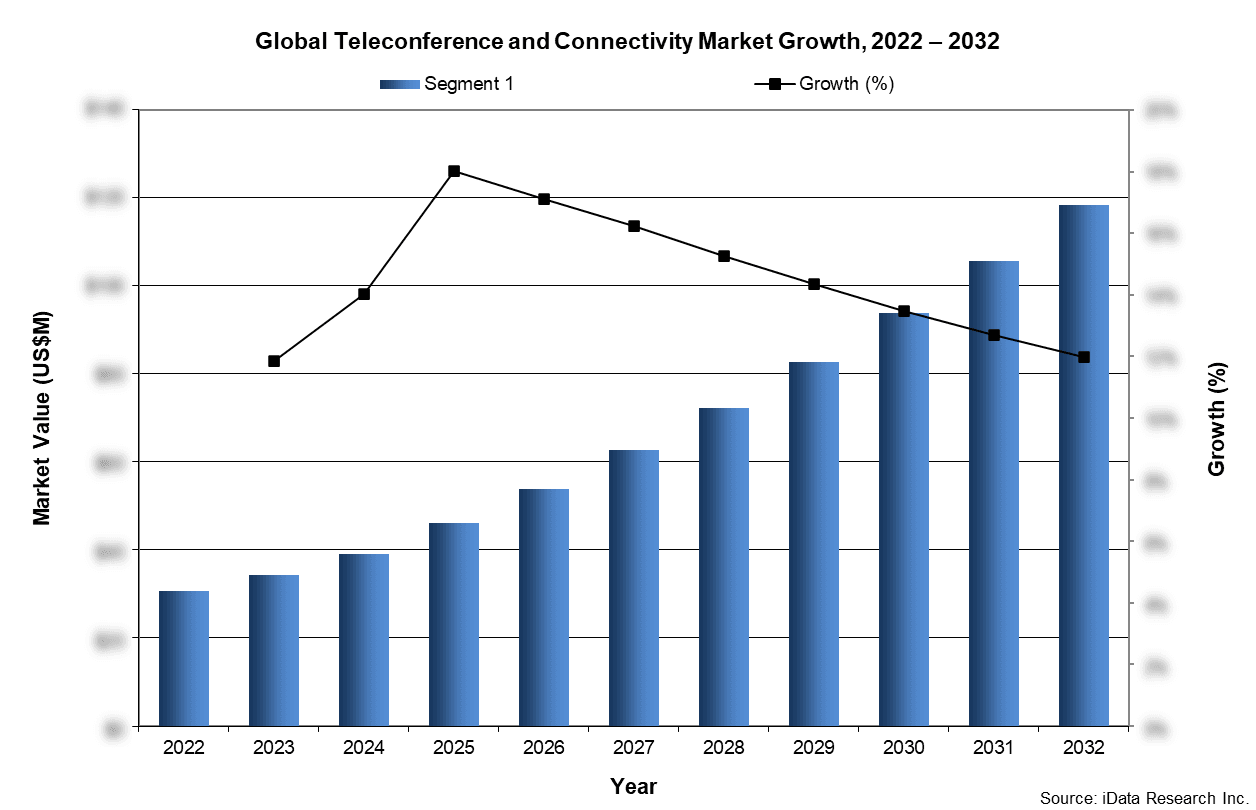 Global teleconference and connectivity market adoption is expected to increase year over year, driven by rising demand for enhanced clinical support, remote collaboration and surgical education, including live procedure broadcasting for training and proctoring. These capabilities also support physician recruitment and retention by enabling modern, collaborative OR environments. However, growth is moderated by integration complexity, data security requirements and IT infrastructure limitations. North America represented the largest regional segment, followed by Western Europe and Asia-Pacific, with North America expected to experience the fastest growth. Latin America and Africa are also projected to grow significantly over the forecast period as investment in surgical infrastructure increases.
Global Teleconference and Connectivity Market Share Insights

- KARL STORZ was the leading competitor in the teleconference and connectivity segment of the integrated operating room market in 2025, driven by its strong presence in OR integration systems. The company does not market a standalone teleconference product; instead, teleconference and connectivity capabilities are delivered as embedded functions within its OR1™ integrated OR platform. KARL STORZ’s IP-based architecture supports video routing and live streaming of surgical video outside the operating room, enabling remote consultation, education and intra-hospital collaboration. Solutions such as OR1™ FUSION and OR1™ NEO support HD and 4K video transmission over hospital networks, facilitating connectivity across departments and sites. These capabilities position KARL STORZ as a connectivity enabler within integrated OR environments rather than a pure-play teleconference vendor.
- Stryker was the second-leading competitor in the 2025 teleconference and connectivity segment within the integrated operating room market, supported by the company’s extensive installed base in the United States. Teleconference and connectivity capabilities are delivered as embedded features within its iSuite® integrated OR platform. The company’s SwitchPoint™ Infinity 3 Control System supports video routing, live streaming and teleconferencing, enabling surgical video and data to be shared outside the operating room for consultation, collaboration and education. These capabilities are further supported by Stryker’s Studio™ 3 media management and ConnectSuite™ IP Video software, which enable secure, network-based video distribution across hospital systems.
- STERIS ranked as the third-leading competitor in the teleconference and connectivity segment of the integrated operating room market in 2025, supported by its established presence in OR integration systems. Connectivity and communication capabilities are delivered through STERIS’s integrated OR platforms under the Harmony iQ™ umbrella, STERIS provides video routing, streaming and system integration functions that enable surgical video and audio to be shared outside the operating room for collaboration and education.
Global Teleconference and Connectivity Market Segmentation Summary
- Teleconference and Connectivity Market
Research Scope Summary
| Report Attribute | Details |
|---|---|
| Regions | North America (Canada, United States) Latin America (Argentina, Bolivia, Brazil, Chile, Colombia, Costa Rica, Dominican Republic, Ecuador, Guatemala, Mexico, Panama, Paraguay, Peru, Puerto Rico, Uruguay, Venezuela) Western Europe (Austria, Benelux, France, Germany, Italy, Portugal, Scandinavia, Spain, Switzerland, United Kingdom) Central & Eastern Europe (Azerbaijan, Baltic States, Belarus, Bulgaria, Croatia, Czech Republic, Georgia, Greece, Hungary, Kazakhstan, Poland, Romania, Russia, Serbia, Slovakia, Slovenia, Turkey, Ukraine) Middle East (Bahrain, Iran, Israel, Kuwait, Oman, Qatar, Saudi Arabia, United Arab Emirates) Asia Pacific (Australia, Cambodia, China, Hong Kong, India, Indonesia, Japan, Kyrgyzstan, Macao, Malaysia, Mongolia, Myanmar, New Zealand, Pakistan, Philippines, Singapore, South Korea, Sri Lanka, Taiwan, Thailand, Uzbekistan, Vietnam) Africa (Algeria, Egypt, Ethiopia, Ghana, Kenya, Libya, Morocco, Nigeria, South Africa, Sudan, Uganda) |
| Base Year | 2025 |
| Forecast | 2026-2032 |
| Historical Data | 2022-2024 |
| Quantitative Coverage | Market Size, Market Shares, Market Forecasts, Market Growth Rates, Units Sold, and Average Selling Prices. |
| Qualitative Coverage | Market Growth Trends, Market Limiters, Competitive Analysis & SWOT for Top Competitors, Mergers & Acquisitions, Company Profiles, Product Portfolios, FDA Recalls, Disruptive Technologies, Disease Overviews. |
| Data Sources | Primary Interviews with Industry Leaders, Government Physician Data, Regulatory Data, Hospital Private Data, Import & Export Data, iData Research Internal Database. |
CONTACT US FOR ADDITIONAL INFORMATION
For full segmentation and any questions regarding research coverage, please contact us for a complimentary demo of the full report.