The U.S. digital dentistry market continues to evolve as clinics and laboratories adopt more advanced technologies to improve efficiency and patient outcomes.
One of the key questions shaping the market today is how artificial intelligence (AI) is influencing digital workflows, particularly in CAD/CAM systems.
As the market grows steadily, understanding how AI fits into existing technologies may help stakeholders better interpret where opportunities and challenges are emerging.
Find growth niches in minutes, not months.
Explore quick, actionable insights from the select markets.
Table of Contents
➜ U.S. Digital Dentistry Market Size and Forecast
➜ U.S. Digital Dentistry Market Growth Drivers and Trends
➜ AI in Digital Dentistry Market: CAD/CAM Software Evolution
➜ U.S. Digital Dentistry Market Adoption of AI-Assisted CAD Tools
➜ FAQ: U.S. Digital Dentistry Market and AI Integration
Key Takeaways
- The U.S. digital dentistry market reached approximately $1.2 billion in 2025 and is projected to exceed $1.6 billion.
- Growth is steady, with a CAGR of 4.6%, supported by long-term digital adoption trends.
- AI integration in CAD/CAM software is improving workflow efficiency and accessibility.
- Digital manufacturing and automation continue to shape laboratory and clinical operations.
U.S. Digital Dentistry Market Size and Forecast
The U.S. digital dentistry market was valued at approximately $1.2 billion in 2025 and is expected to grow at a compound annual growth rate (CAGR) of 4.6%, reaching just over $1.6 billion over the forecast period.
This level of growth reflects a market that is expanding in a measured and predictable way rather than experiencing rapid spikes.
Much of the increase is tied to a rising installed base of digital systems, as more dental practices and laboratories continue transitioning from traditional methods to digital workflows.
Over time, this steady shift contributes to consistent demand for software, equipment, and related services.
📋 Get more insights from our 2026 U.S. Digital Dentistry Market Report
U.S. Digital Dentistry Market Growth Drivers and Trends
The U.S. digital dentistry market demonstrates moderate but sustainable growth.
Several structural factors continue to support this trajectory:
- Ongoing transition from analog to digital workflows
- Increased reliance on digital manufacturing technologies
- Growing demand for efficiency in clinical and lab settings
At the same time, pricing pressures may limit faster revenue expansion. Even so, the broader shift toward automation and streamlined care delivery suggests long-term stability.
Companies may consider how these underlying trends reflect a market that values consistency, productivity, and scalability over rapid disruption.
AI in Digital Dentistry Market: CAD/CAM Software Evolution
Artificial intelligence is becoming an increasingly visible component of the digital dentistry market, particularly within CAD/CAM software environments.
Rather than introducing entirely new workflows, AI is being layered into existing systems to improve how they function.
This approach allows users to maintain familiar processes while gradually benefiting from enhanced automation.
What Does AI Actually Do in Dental Design?
In practice, AI-enabled features are helping streamline several stages of the restoration design process.
Tasks that once required detailed manual input, such as defining margins or shaping anatomical structures, can now be partially automated.
As a result, clinicians and technicians are often able to complete cases more quickly, while maintaining a level of consistency that may be difficult to achieve through manual design alone.
How Does AI Improve Visualization and Decision-Making?
Another important aspect of AI integration is its effect on visualization and decision-making.
Improved rendering and predictive design tools may help users better anticipate final outcomes before manufacturing begins.
This can reduce the need for adjustments later in the workflow, which in turn may contribute to overall efficiency gains.
Is AI Replacing Traditional CAD Workflows?
Despite these advancements, AI is not replacing conventional CAD workflows.
Instead, it functions as a supportive layer that enhances productivity without requiring a full system overhaul.
Some organizations are exploring how these incremental improvements could reduce training requirements and make digital tools more accessible to a wider range of users.
Over time, this gradual integration may play a role in expanding adoption across both laboratories and clinical settings.
U.S. Digital Dentistry Market Adoption of AI-Assisted CAD Tools
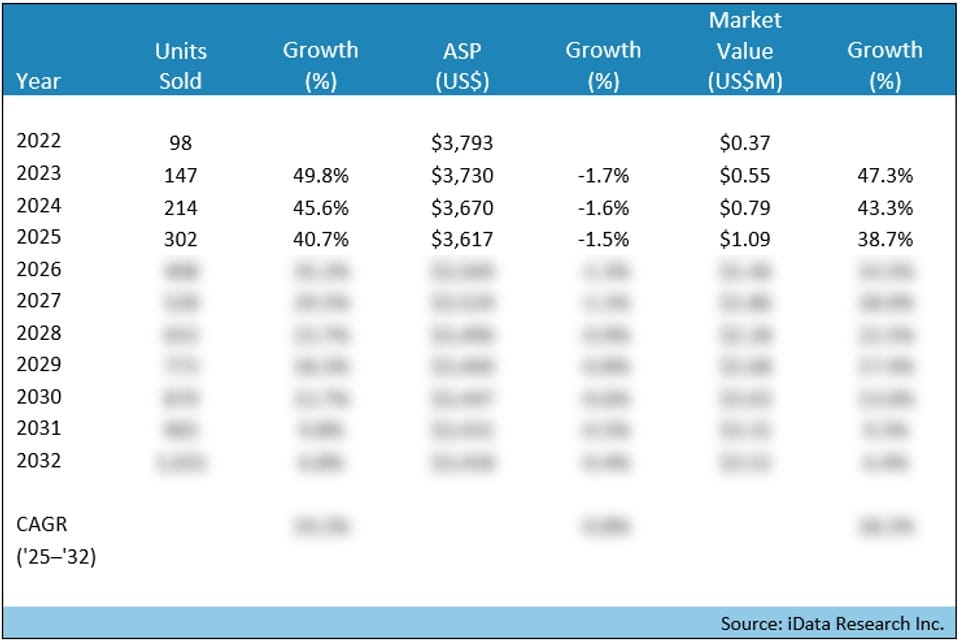
AI-Assisted CAD Software Market, U.S., 2022-2032 – iData Research
Although the CAD software segment is still largely dominated by non-AI systems, adoption of AI-assisted tools is increasing.
AI-enabled CAD solutions are being applied across a wide range of restorative procedures, including:
- Crowns
- Bridges
- Implant restorations
As these capabilities expand, laboratories and clinics may explore how AI can complement existing systems rather than replace them. The gradual integration approach reflects a market that values reliability and proven workflows.
FAQ: U.S. digital dentistry market and AI integration
What is the current size of the U.S. digital dentistry market?
The U.S. digital dentistry market was valued at approximately $1.2 billion in 2025. It is expected to grow steadily, reaching just over $1.6 billion over the forecast period, reflecting consistent adoption of digital tools and workflows.
What is driving growth in the U.S. digital dentistry market?
Growth in the U.S. digital dentistry market is largely supported by the ongoing shift from traditional to digital workflows, increased use of CAD/CAM systems, and rising demand for efficiency in both dental practices and laboratories. Long-term adoption trends appear to play a larger role than short-term market changes.
How is AI used in the digital dentistry market?
AI is being integrated into CAD/CAM software to support design automation and improve workflow efficiency. It can assist with tasks such as margin detection, anatomical design, and occlusal adjustments, helping reduce manual input while improving consistency across cases.
Is AI replacing traditional CAD/CAM workflows in dentistry?
AI is not replacing traditional CAD/CAM workflows. Instead, it is enhancing existing systems by automating selected steps and improving usability. This allows clinicians and technicians to maintain familiar processes while benefiting from increased efficiency.
What are the benefits of AI in the U.S. digital dentistry market?
AI may help improve productivity, reduce design time, and support more consistent outcomes. It may also lower training barriers for new users and make digital systems more accessible across a wider range of practices and laboratories.
Are AI-assisted CAD tools widely adopted in the digital dentistry market?
Adoption of AI-assisted CAD tools is increasing, although most systems in use today are still non-AI-based. The transition appears gradual, as many organizations continue to integrate AI features alongside existing digital workflows.
What is the future outlook for AI in the U.S. digital dentistry market?
AI integration is expected to expand over time as software capabilities evolve. The market outlook suggests steady growth, with AI playing a supporting role in improving efficiency, managing higher case volumes, and enhancing digital workflow performance.
Turn market painpoints into opportunities
Explore how procedure trends and competitor positioning create clear openings for industry experts in the market.
Other News
If you enjoyed this post, explore these related insights next:
(POPULAR) Medical Market Research: Complete Guide to Methods, Companies, and Market Applications
Healthcare Market Research Explained: Why It Matters More Than Ever
How Healthcare Market Research Helps MedTech Companies Grow Revenue


