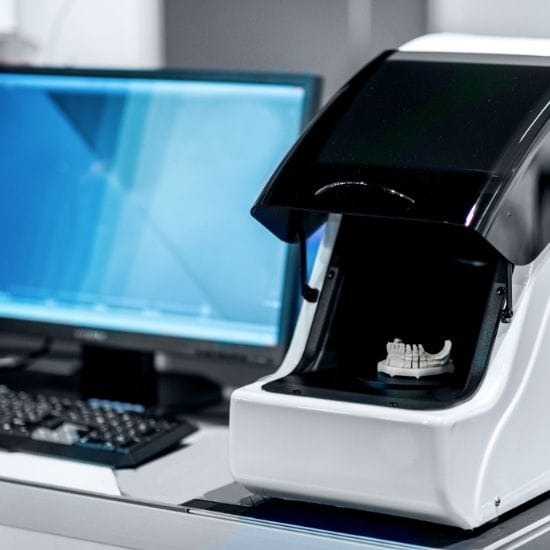
The US digital dentistry market is evolving fast — and so is the competition.
Valued at approximately $1.2 billion in 2025, the market is projected to grow at a CAGR of 4.6%, reaching just over $1.6 billion by the end of the forecast period, according to iData Research.
But growth is only part of the story.
Pricing pressure is intensifying. Workflows are becoming more interconnected. And the race for market share is being fought across CAD/CAM devices, scanning platforms, dental 3D printers, materials, and software ecosystems simultaneously.
So who is winning — and why?
This blog breaks down the top competitors shaping the U.S. digital dentistry landscape in 2025, based on the latest research from iData Research.
Find growth niches in minutes, not months.
Explore quick, actionable insights from the select markets.
Table of Contents
- U.S. Digital Dentistry Market Size and Growth in 2025
- Who Is the #1 Company in U.S. Digital Dentistry?
- Why Is Align Technology Ranked #2 in Digital Dentistry?
- What Makes Ivoclar a Top Competitor in Dental Materials?
- Why Do Dental Labs Choose 3Shape?
- How Does Planmeca Compete in Chairside Dentistry?
- Is Medit a Credible Alternative to Premium Scanners?
- What Is Driving Dental 3D Printing Growth?
- Key Takeaways
- FAQ: U.S. Digital Dentistry Competitors
Key Takeaways
- The U.S. digital dentistry market was valued at approximately $1.2 billion in 2025, growing at a CAGR of 4.6% toward $1.6 billion.
- Dentsply Sirona leads the market, supported by its end-to-end ecosystem spanning CAD/CAM, scanning, printing, and the DS Core cloud platform.
- Align Technology ranks second, driven by a software-led, recurring-revenue model anchored by Invisalign and iTero.
- Ivoclar holds the third position through leadership in CAD/CAM materials, particularly the IPS e.max lithium disilicate system.
- 3Shape differentiates through open-platform compatibility, serving mixed-vendor digital ecosystems across labs and clinics.
- Planmeca focuses on system-level chairside packages, but faces rising competitive pressure in a crowded channel.
- Medit competes at the value tier, with momentum increasingly tied to software experience and ecosystem integration.
- Dental 3D printing is shifting toward LCD and MSLA technologies, with falling ASPs expanding adoption across both lab and clinical settings.
U.S. Digital Dentistry Market Size and Growth in 2025
The U.S. digital dentistry market sits at approximately $1.2 billion in 2025.
Growth is real, but it is measured. A CAGR of 4.6% reflects steady, sustainable expansion rather than a surge — driven by three structural forces:
- Continued clinical digitization — more dental practices adopting intraoral scanners, chairside systems, and connected platforms
- Lab-level digital manufacturing — milling and 3D printing replacing manual fabrication at growing scale
- Software and workflow integration — connecting chair, lab, and cloud into unified treatment pathways
At the same time, average selling prices (ASPs) across key categories — especially dental 3D printers and CAD/CAM devices — continue to decline.
More competition means buyers have more leverage. That dynamic is reshaping how every major competitor positions its portfolio.
Want a deeper look at the market by segment? Explore iData Research’s U.S. Digital Dentistry Market Report Suite.
Who Is the #1 Company in U.S. Digital Dentistry?
Dentsply Sirona holds the top position in the U.S. digital dentistry market in 2025.
Its leadership rests on a few clear advantages:
- A product ecosystem that spans both chairside and laboratory workflows
- Dominant share in the CAD/CAM device market, anchored by the CEREC chairside system and inLab laboratory solutions
- The DS Core cloud platform, which connects imaging, treatment planning, scanning, milling, and printing into one integrated environment
Dentsply Sirona delivered eight FDA clearances and 21 product launches in 2024, according to filings with the U.S. Securities and Exchange Commission. In May 2026, the company launched Smart View-Detect — described as the world’s first FDA-cleared, AI-enabled diagnostic aid for detecting periapical radiolucencies in CBCT scans.
That breadth of innovation is a moat that competitors find difficult to replicate quickly.
However, the market is becoming more fragmented. Dentsply Sirona continues to face moderate competitive pressure as open-platform vendors, value-tier entrants, and software-first competitors carve out growing segments of the market.
Its response is clear: deepen the ecosystem, expand DS Core, and make switching costs high through workflow integration rather than hardware lock-in alone.
For more on how Dentsply Sirona compares globally, read iData Research’s coverage of the Changing U.S. Digital Dentistry Market Landscape.
Why Is Align Technology Ranked #2 in Digital Dentistry?
Align Technology is the second-largest competitor in the U.S. digital dentistry market in 2025.
What separates Align from most other players is its business model.
Rather than competing on hardware alone, Align generates recurring revenue through its clear aligner treatments — specifically through the Invisalign platform. Every case submitted through the Align digital platform represents ongoing commercial engagement, not a one-time device sale.
Its competitive strengths include:
- Leading share in the CAD/CAM software segment
- The iTero intraoral scanner, widely adopted for orthodontic workflows and increasingly used for general dentistry digitization
- Deep integration with DSOs (Dental Service Organizations), giving Align structural access to large patient volumes
- AI-assisted X-ray analysis through Align X-Ray Insights, which integrates into the Align Digital Platform to assist with clinical decision-making
Align’s strategy is software-forward: own the treatment planning workflow, and the hardware (iTero scanners) follows naturally.
This makes Align less vulnerable to ASP compression in the device market than competitors whose revenue depends primarily on equipment sales.
Learn more about how intraoral scanners are reshaping digital workflows in iData’s article on Intraoral Scanners: Enhancing Digital Workflows in Modern Dentistry.
What Makes Ivoclar a Top Competitor in Dental Materials?
Ivoclar ranks third overall in the U.S. digital dentistry market in 2025.
Its strength is concentrated in one high-value area: CAD/CAM materials.
Specifically, Ivoclar holds a leading position in the CAD/CAM materials segment through its restorative material portfolio — most notably the IPS e.max lithium disilicate system.
IPS e.max remains the standard of care for esthetic restorations in many clinical settings. Its combination of translucency, strength, and compatibility with common milling platforms keeps it deeply embedded in both lab and chairside workflows.
Between 2023 and 2025, Ivoclar focused on:
- New product launches within existing material categories
- Digital workflow partnerships to extend its material ecosystem
- Strengthening compatibility with a wider range of CAD/CAM milling systems
Ivoclar’s competitive model is different from device-led competitors. It wins by being the preferred material layer within workflows controlled by others — a strategy that makes it resilient to device market fragmentation.
Why Do Dental Labs Choose 3Shape?
3Shape holds a strong position in both intraoral and laboratory scanning in the U.S. market.
Its competitive edge is not simply scan performance — it is open workflow compatibility.
In a market where dental clinics and labs increasingly operate with mixed-vendor setups (one scanner brand, a different milling system, a third-party 3D printer, and multiple software layers), 3Shape’s ability to integrate across ecosystems is a genuine differentiator.
In 2025, 3Shape’s advantage includes:
- A broad portfolio serving multiple budgets and practice types
- Strong reputation for scan accuracy and resolution
- Positioning as a platform-oriented vendor rather than a single-category supplier
- Support for CAD/CAM, 3D printing, and partner manufacturing integrations in a single connected environment
The market’s broader move toward interconnected workflows continues to favor 3Shape’s positioning. Labs that want flexibility — not vendor lock-in — find 3Shape a natural fit.
How Does Planmeca Compete in Chairside Dentistry?
Planmeca competes primarily through integrated chairside solutions that appeal to clinics seeking an end-to-end restorative workflow from a single vendor.
Its value proposition centers on:
- System-level packages that reduce integration complexity for practices
- Workflow efficiency for environments where standardization and vendor support matter more than best-of-breed components
- A continued focus on scanning and chairside milling combinations
The challenge for Planmeca is that the chairside channel is becoming increasingly crowded.
More vendors are targeting this segment, and buyers are negotiating harder on price and service terms. Planmeca’s ability to sustain share will depend on demonstrating clear advantages in usability, upgradeability, and clinical workflow outcomes — not just hardware specifications.
Is Medit a Credible Alternative to Premium Scanners?
Yes — and the market has taken notice.
Medit has built a notable foothold in both intraoral and lab scanning by competing aggressively on value and accessibility.
Its positioning is deliberate:
- Target price-sensitive practices and labs that want credible scanning performance without premium pricing
- Serve smaller labs and independent clinics at the early stages of digitization
- Compete effectively in the mid- and low-price tiers that premium vendors increasingly vacate
As more suppliers crowd these price tiers, Medit’s momentum increasingly depends on three factors: software experience, customer support, and partner ecosystem compatibility.
Hardware differentiation at the value tier is narrowing. The vendors that survive in this segment will be the ones that build stickiness through software and services — not just affordable devices.
What Is Driving Dental 3D Printing Growth?
Dental 3D printing is one of the fastest-moving segments within digital dentistry — and recent developments in 2025 and early 2026 illustrate exactly where the market is heading.
Two notable events signal the direction of travel:
- In February 2026, Rapid Shape introduced RS VIVO — a premium line of 3D printing dental resins with full FDA approval across the entire portfolio.
- In January 2026, FUGO Precision 3D debuted an automated integrated dental printing system at LMT Lab Day 2026.
These launches reflect two concurrent trends identified by iData Research:
1. ASP decline is accelerating adoption
Average selling prices for dental 3D printers continue to fall due to increased competition and broader availability of lower-cost systems. This is making 3D printing accessible to a wider range of dental clinics and laboratories that previously could not justify the capital investment.
2. LCD technology is gaining ground over SLA
There is a visible shift toward LCD-based printers, driven by cost efficiency, improving print quality, and suitability for high-volume applications. At the same time, masked stereolithography (MSLA) systems — a subset of SLA technology — are also gaining traction, particularly where precision remains the priority.
For labs and clinics evaluating entry into 3D printing, the core question is no longer “can we afford it” — it is “which workflow does this fit into?”
Explore more on dental 3D printing developments from iData Research’s coverage of IDS 2025 Day 3: AI-Powered Workflows and Next-Gen Dental Tech.
FAQ: U.S. Digital Dentistry Competitors
Who is the largest company in the U.S. digital dentistry market?
Dentsply Sirona is the largest competitor in the U.S. digital dentistry market as of 2025. The company leads the CAD/CAM device segment and benefits from a broad product ecosystem that spans both chairside and laboratory workflows, connected through its DS Core cloud platform.
What is the U.S. digital dentistry market size in 2025?
According to iData Research, the U.S. digital dentistry market was valued at approximately $1.2 billion in 2025. It is projected to grow at a CAGR of 4.6%, reaching just over $1.6 billion by the end of the forecast period.
What segment does Align Technology lead in digital dentistry?
Align Technology holds the leading share in the CAD/CAM software segment. Its broader competitive advantage stems from its integrated digital orthodontic ecosystem, which includes the Invisalign platform for clear aligners and iTero intraoral scanners for digital impressions.
What is driving dental 3D printer adoption in the U.S.?
Two key forces are driving adoption: falling average selling prices due to increased competition, and a shift toward LCD-based printing technology, which offers cost efficiency and improving print quality suitable for high-volume applications. These dynamics are expanding access to 3D printing among smaller dental clinics and independent labs.
How does 3Shape compete against Dentsply Sirona and Align?
3Shape competes primarily on open-platform flexibility. Unlike Dentsply Sirona and Align, which offer tightly integrated proprietary ecosystems, 3Shape is designed to work across mixed-vendor digital environments. This makes it attractive to labs and clinics that want scanner performance without being locked into a single vendor’s broader product stack.
What is Medit’s strategy in the digital dentistry market?
Medit competes by offering credible scanning performance at a lower price point than premium vendors. Its strategy targets price-sensitive dental practices, smaller labs, and clinics at early stages of digitization. As the value tier becomes more competitive, Medit’s ability to differentiate through software experience and ecosystem compatibility will be increasingly important.
What are the key product segments in U.S. digital dentistry?
The U.S. digital dentistry market includes CAD/CAM devices (intraoral scanners, chairside systems, lab scanners, and milling systems), CAD/CAM materials (blocks and discs), dental 3D printers, dental 3D printing materials, and CAD/CAM software. Each segment has a distinct competitive landscape and growth trajectory.
Turn market painpoints into opportunities
Explore how procedure trends and competitor positioning create clear openings for industry experts in the market.
Data and competitive insights in this article are drawn from iData Research’s U.S. Market Report Suite for Digital Dentistry. For full market data, segment breakdowns, and competitor analysis, visit the U.S. Digital Dentistry Market Report.
Additional sources: U.S. Securities and Exchange Commission (SEC) filings from Dentsply Sirona (FY2025, FY2026); FDA product clearance announcements.


