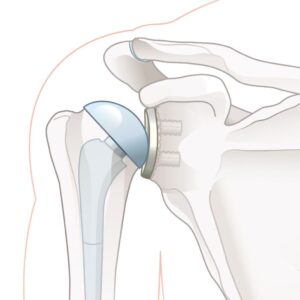
Robotic shoulder replacement has become a two-company race between Stryker and Zimmer Biomet in 2026.
Stryker leads on scale, ranking first in both the U.S. shoulder reconstruction device market and the U.S. robotic-assisted orthopedic surgery system market in 2025, according to iData Research.
Zimmer Biomet ranks second in both markets, but it was the first company to bring a shoulder robot to market with ROSA Shoulder.
Stryker answered with Mako Shoulder, which pairs its Mako robot with Tornier implants and Blueprint 3D planning for reverse shoulder replacement.
This guide explains how each company built its position, how the two robots differ, and who else is entering the field.
Find growth niches in minutes, not months.
Explore quick, actionable insights from the select markets.
Table of Contents
➜ Who leads robotic shoulder replacement in 2026?
➜ Why Stryker leads the U.S. shoulder replacement market
➜ How does Stryker’s Mako Shoulder work?
➜ Why Zimmer Biomet was first in robotic shoulder replacement
➜ Mako Shoulder vs ROSA Shoulder: what is the difference?
➜ Who else is entering robotic shoulder replacement?
➜ Robotic shoulder replacement FAQs
Key Takeaways
- Stryker ranked first and Zimmer Biomet second in the U.S. shoulder reconstruction device market in 2025.
- The same two companies ranked first and second in U.S. robotic-assisted orthopedic surgery systems in 2025.
- Zimmer Biomet’s ROSA Shoulder received FDA clearance in February 2024 as the first robotic system for shoulder replacement.
- Stryker’s Mako Shoulder reached full market release in 2026 and is built for primary reverse shoulder replacement.
- Shoulder reconstruction is expected to grow fastest among the major U.S. small bone and joint device segments.
Who leads robotic shoulder replacement in 2026?
Stryker leads robotic shoulder replacement on market position, while Zimmer Biomet leads on time in market and procedure range.
iData Research ranks Stryker first, Zimmer Biomet second, and DePuy Synthes third in the U.S. shoulder reconstruction device market for 2025.
In U.S. robotic-assisted orthopedic surgery systems, iData ranks Stryker first, Zimmer Biomet second, and Corin Group third for 2025.
Stryker and Zimmer Biomet are the only companies that hold a top-two spot in both rankings.
The U.S. small bone and joint orthopedic device market, which includes shoulder reconstruction, was valued at nearly $4.6 billion in 2025 and is forecast to reach about $6.8 billion by 2032.
iData expects shoulder reconstruction to post the strongest growth of the major segments in that market, supported by wider use of shoulder replacement and new enabling technology.
The broader U.S. surgical navigation and robotics market was valued at nearly $8.2 billion in 2025 and is forecast to pass $20.1 billion by 2032.
Each shoulder robot is tied to its maker’s implant line, so the robotics race and the implant race reinforce each other.
Why Stryker leads the U.S. shoulder replacement market
Stryker was the top company in the U.S. small bone and joint device market in 2025, holding roughly a quarter of the total market, per iData Research.
It is the only competitor with a significant position across all four anatomies in that market: shoulder, elbow, hand and wrist, and foot and ankle.
Mako Shoulder builds on two established Stryker shoulder brands, Tornier implants and Blueprint 3D planning software.
Stryker says surgeons have used Blueprint for more than 250,000 case plans globally.
Stryker also leads U.S. robotic-assisted orthopedic surgery, where its Mako SmartRobotics platform began in hip and knee replacement.
The company kept widening the Mako family in 2026, launching Mako RPS, a handheld robotic system for total knee replacement, in July.
For a full ranking of the segment, see our breakdown of the top 3 U.S. small bone and joint device companies in 2026.
How does Stryker’s Mako Shoulder work?
Mako Shoulder combines three Stryker technologies: Mako SmartRobotics, Tornier Perform Reversed implants, and Blueprint 3D planning software.
Surgeons plan and simulate the procedure on a personalized 3D model of the patient’s shoulder before entering the operating room.
During surgery, the robotic arm uses haptic boundaries to guide preparation of the glenoid, the shallow socket of the shoulder joint.
The FDA cleared the Mako Shoulder application in November 2024 for primary reverse shoulder arthroplasty.
Stryker completed its first Mako Shoulder cases in December 2024, according to iData Research.
Stryker announced the full market release of Mako Shoulder at the AAOS 2026 Annual Meeting in March 2026, according to iData Research.
At the same meeting, Stryker said Mako Shoulder would come to the Mako 4 robot in the second half of 2026.
The first European Mako Shoulder case was announced in June 2026 at UPMC Sports Surgery Clinic in Dublin, Ireland.

Why Zimmer Biomet was first in robotic shoulder replacement
Zimmer Biomet received FDA 510(k) clearance for ROSA Shoulder in February 2024, making it the first robotic surgical assistant cleared for shoulder replacement.
The world’s first ROSA Shoulder surgery followed in April 2024, performed by Dr. John Sperling of Mayo Clinic.
ROSA Shoulder supports both anatomic and reverse shoulder replacement, and it does not require a pin in the center of the glenoid.
The system joins Zimmer Biomet’s shoulder implant portfolio, which includes the Identity Shoulder System.
In May 2026, the FDA cleared an advanced version of the ROSA Shoulder System with improved robotic glenoid reaming and humeral resection.
In its announcement of the update, Zimmer Biomet calls it the industry’s first robotic system to support both glenoid and humeral preparation for anatomic and reverse techniques.
The updated system connects to ZBEdge, Zimmer Biomet’s orthopedic intelligence platform.
Zimmer Biomet completed the first procedures with the updated ROSA Shoulder in August 2026, per iData Research.
Mako Shoulder vs ROSA Shoulder: what is the difference?
The biggest difference between the two robots is procedure scope.
Mako Shoulder is designed for primary reverse shoulder replacement using Stryker’s Tornier Perform Reversed glenoid implants.
ROSA Shoulder covers both anatomic and reverse techniques, which gives it the wider procedure range of the two.
The second difference is how each robot guides the surgeon.
Mako uses a robotic arm with haptic boundaries that keep the cutting tool within the plan during glenoid preparation.
ROSA gives live feedback during surgery, letting surgeons control glenoid ream depth and validate bone cuts as they go.
Both robots rely on 3D preoperative planning, which reflects the shift iData sees toward integrated, procedure-specific platforms rather than implants alone.
Precision matters because reverse shoulder replacement outcomes are strongly linked to implant accuracy, especially glenoid component inclination, according to a 2025 study in Shoulder & Elbow.
A 2025 review in the Journal of Hand and Microsurgery notes that shoulder arthroplasty volume is growing faster than hip and knee arthroplasty, while long-term robotic outcomes are still under study.
Who else is entering robotic shoulder replacement?
Smith+Nephew completed its first clinical shoulder cases with its CORI XT handheld robotics platform in 2026, supporting both anatomic and reverse shoulder replacement.
Arthrex, the second-ranked U.S. small bone and joint company, has chosen planning software over robotics and received clearance for its Virtual Implant Positioning System for shoulder arthroplasty in October 2024.
DePuy Synthes, third in U.S. shoulder reconstruction, agreed in May 2026 to acquire selective rights to Gemtrack miniature radiofrequency tracking technology for its joint reconstruction portfolio.
Johnson & Johnson MedTech also launched INHANCE INTACT, a tissue-sparing total shoulder replacement system, in October 2025.
These moves widen the field, but Stryker and Zimmer Biomet remain the top two names in iData’s shoulder and orthopedic robotics rankings.
Planning software is a big part of this race, as covered in our look at AI surgical planning in 2026.
For the soft-tissue side of the robotics contest, read Medtronic’s Hugo, da Vinci SP, and the new robotic surgery race.
Robotic shoulder replacement FAQs
What is robotic shoulder replacement?
Robotic shoulder replacement is shoulder arthroplasty in which a robotic system helps the surgeon carry out a 3D preoperative plan for implant placement.
The surgeon still performs the operation and uses the robot for guidance during bone preparation.
Which company launched the first shoulder replacement robot?
Zimmer Biomet was first, receiving FDA clearance for ROSA Shoulder in February 2024.
Can Mako Shoulder be used for anatomic shoulder replacement?
Stryker markets Mako Shoulder for primary reverse shoulder replacement with Tornier Perform Reversed implants.
Who leads the U.S. shoulder replacement device market?
Stryker led the U.S. shoulder reconstruction device market in 2025, followed by Zimmer Biomet and DePuy Synthes, according to iData Research.
How fast is the U.S. small bone and joint device market growing?
iData forecasts the U.S. small bone and joint orthopedic device market to grow at a 5.5% CAGR, from nearly $4.6 billion in 2025 to about $6.8 billion by 2032.
Stryker holds the scale advantage in robotic shoulder replacement, while Zimmer Biomet holds the head start and the broader procedure range.
For full competitor shares, procedure volumes, and forecasts, explore the U.S. small bone and joint orthopedic device market report from iData Research.
Turn market painpoints into opportunities
Explore how procedure trends and competitor positioning create clear openings for industry experts in the market.


