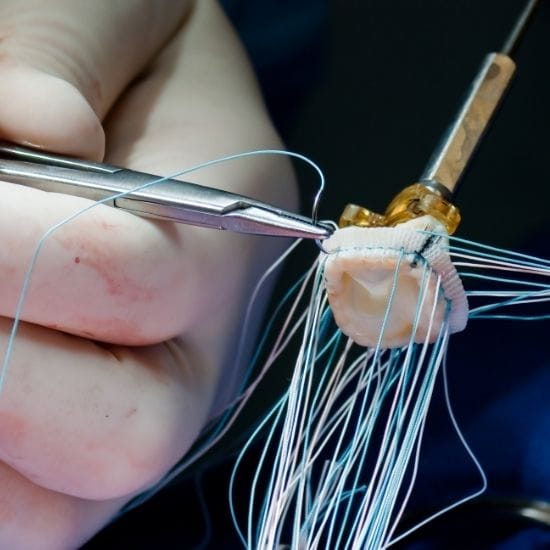
Minimally invasive heart surgery is redefining how heart conditions are managed, offering safer, faster alternatives to open-heart procedures. Two major innovations leading this shift are Transcatheter Aortic Valve Implantation (TAVI) and Transcatheter Mitral Valve Repair (TMVr).
In this blog, we’ll explore how these techniques are evolving, how long TAVI valves last, the difference between TAVI and TAVR, and what the future looks like for minimally invasive heart procedures worldwide.
Find growth niches in minutes, not months.
Explore quick, actionable insights from the select markets.
Table of Contents
➜ Can a Heart Valve Be Replaced Without Open-Heart Surgery?
↳ What Is the Average Age for Heart Valve Replacement?
➜ How Long Do TAVI Valves Last?
➜ Recovery Time After Heart Valve Replacement
➜ Market Trends in Minimally Invasive Heart Valve Treatments
↳ Growth of the Global TAVI & TMVr Market
↳ Who Are the Market Leaders in Minimally Invasive Heart Surgery?
➜ Country Leadership and Adoption Rates of Minimally Invasive Heart Surgery
➜ Challenges and Disadvantages of Minimally Invasive Heart Surgery
➜ The Future Outlook for Minimally Invasive Valve Treatments
➜ Get the Full Global Cardiac Surgery Market Report Today
Key Takeaways
-
TAVI and TMVr allow heart valve repair and replacement without open-heart surgery.
-
TAVI valves typically last 8–10 years and are increasingly used in younger patients.
-
The average patient age is 75+, but eligibility is expanding.
-
The global cardiac surgery market is expected to grow at a 5.5% CAGR through 2030.
-
The U.S., Germany, and Japan lead in procedural volume and innovation.
-
Recovery times are significantly shorter than traditional surgery.
-
Device costs and procedure complexity remain limiting factors in some regions.
What Is a TAVI Procedure?
@voka.io How does the TAVI procedure help treat aortic valve stenosis? Part 2 For those diagnosed with aortic valve stenosis, TAVI (Transcatheter Aortic Valve Implantation) offers a minimally invasive solution. Unlike traditional open-heart surgery, TAVI involves placing a new valve inside the damaged one through a catheter, usually inserted via the femoral artery. This revolutionary procedure reduces recovery time, making it a game-changer for patients who may not be eligible for traditional surgery. It helps restore proper blood flow, alleviating symptoms like chest pain, fatigue, and shortness of breath. Curious about how TAVI works and why it’s transforming the treatment of aortic valve stenosis? Watch our video to see the procedure explained step by step in immersive 3D! #TAVI #cardiology #heartvalve #aorticstenosis #anatomy #anatomy3d #3danatomy #medstudents #medicalstudents #medicaltsudent #digitallearning #humanbody How does the TAVI procedure help treat aortic valve stenosis? Part 2 For those diagnosed with aortic valve stenosis, TAVI (Transcatheter Aortic Valve Implantation) offers a minimally invasive solution. Unlike traditional open-heart surgery, TAVI involves placing a new valve inside the damaged one through a catheter, usually inserted via the femoral artery. This revolutionary procedure reduces recovery time, making it a game-changer for patients who may not be eligible for traditional surgery. It helps restore proper blood flow, alleviating symptoms like chest pain, fatigue, and shortness of breath. Curious about how TAVI works and why it’s transforming the treatment of aortic valve stenosis? Watch our video to see the procedure explained step by step in immersive 3D! #TAVI #cardiology #heartvalve #aorticstenosis #anatomy #anatomy3d #3danatomy #medstudents #medicalstudents #medicaltsudent #digitallearning #humanbody
TAVI (Transcatheter Aortic Valve Implantation), also known as TAVR (Transcatheter Aortic Valve Replacement), is a minimally invasive procedure that replaces a narrowed aortic valve that fails to open properly (aortic stenosis). Instead of opening the chest, the valve is inserted via a catheter through the femoral artery or a small chest incision.
TAVI vs TAVR
TAVI and TAVR refer to the same procedure. TAVI is the term more commonly used in Europe, while TAVR is used in the United States. Both describe the same life-saving intervention.
📌Learn More About TAVI – Read:
➜ The Future of TAVI: Abbott’s Navitor™ System Reduces Complications and Enhances Recovery
Can a Heart Valve Be Replaced Without Open-Heart Surgery?

Yes. Minimally invasive heart surgery now allows valve replacement without fully opening the chest. TAVI and TMVr procedures offer this benefit by using catheter-based access, often through a leg artery or small chest incision. These options are especially valuable for elderly or high-risk patients.
What Is the Average Age for Heart Valve Replacement?
Most TAVI (Transcatheter Aortic Valve Implantation) patients are 75 and older, although newer data shows increasing eligibility in younger patients due to improvements in valve durability and procedural outcomes.
How Long Do TAVI Valves Last?
Current clinical data shows that TAVI valves typically last 8 to 10 years. Newer-generation valves may offer extended durability, making them increasingly viable for lower-risk and younger patients. Ongoing trials are exploring long-term performance.
What is a TMVr Procedure?
@dr.amelia.3 Transcatheter Mitral Valve Replacement |surgery👆👆👆 #newtechnology #doctorsoftiktok #doctorsoftiktok #doctorsoftiktok #doctorstrange #doctorsoftiktok #surgerytiktok #unitedkingdom #surgerytiktok #unitedkingdom #doctorstrange #scienceexperiments #science #doctor #3danimation #3danimation #surgery #unitedkingdom #doctorstrange #scienceexperiments #science #foryoupage #fouryou #viraltiktok
TMVr (Transcatheter Mitral Valve Repair) is a catheter-based procedure that repairs the mitral valve without opening the chest. It’s designed for patients with severe mitral regurgitation who are not suitable for traditional surgery.
The TMVr procedure involves clipping the leaflets of the mitral valve together to reduce leakage, with the goal of restoring normal blood flow and relieving symptoms like fatigue, shortness of breath, or signs of heart failure after valve replacement.
TMVr medical abbreviation stands for Transcatheter Mitral Valve Repair.
📌Learn More About TMVr – Read:
➜ InnovHeart’s Groundbreaking TMVr Procedure Achieves Remarkable Success: SATURN Valve
Recovery Time After Heart Valve Replacement
One of the major advantages of minimally invasive valve procedures is reduced recovery time. Most TAVI and TMVr patients can leave the hospital within 2–5 days, compared to 7–10 days for traditional open-heart surgery.
Typical recovery milestones include:
- Walking within 24–48 hours
- Returning to light activity in 1–2 weeks
- Full recovery in 4–6 weeks (vs. 3 months+ for open surgery)
Market Trends in Minimally Invasive Heart Valve Treatments
Growth of the Global TAVI & TMVr Market

(Note: to see the full graph, download our 2024–2030 Global Cardiac Surgery Market Report)
The global cardiac surgery device market was valued at $17.1 billion in 2023, with TAVI and TMVr among the fastest-growing segments. The market is expected to reach $24.9 billion by 2030.

Who Are the Market Leaders in Minimally Invasive Heart Surgery?

- Edwards Lifesciences leads the TAVI market but has limited share in TMVr.
- Abbott is gaining market share across both segments, especially TMVr.
- Medtronic remains competitive in tissue valve, annuloplasty, and TAVI segments.
Country Leadership and Adoption Rates of Minimally Invasive Heart Surgery
- United States: Leading in both TAVI and TMVr procedures performed annually.
- Germany and France: Among the top adopters in Europe for catheter-based valve interventions.
- Japan: Rapidly expanding its TAVI program, with high procedural safety records.
- China and India: Emerging markets with rising demand, driven by increased diagnosis and urban healthcare access.
Challenges and Disadvantages of Minimally Invasive Heart Surgery
Despite the benefits, there are challenges:
- Higher device cost: The price of heart valve replacement using TAVI or TMVr is often higher than conventional surgery.
- CT TAVI Planning: Requires pre-procedural CT imaging, which may not be accessible in all regions.
- Procedure complexity: Success depends on operator experience and anatomical compatibility.
The Future Outlook for Minimally Invasive Valve Treatments

Expanding indications into moderate-risk and younger populations
Traditionally, transcatheter valve interventions were reserved for high-risk patients who couldn’t undergo open-heart surgery. However, approvals, such as those by Health Canada, have expanded eligibility to moderate-risk and younger populations. This means more patients can benefit from less invasive procedures with faster recovery times.
Improved Device Longevity
Innovations in biomaterials and valve design are enhancing the durability of transcatheter heart valves. This is crucial for younger patients who require long-lasting solutions. Research is focused on reducing complications like valve degeneration and paravalvular leaks.
Integration with AI for Procedural Planning
AI is revolutionizing how heart valve procedures are planned and executed. Machine learning algorithms can analyze patient-specific anatomical data to optimize valve selection and placement, reducing procedural risks and improving outcomes.
Enhanced Imaging and Real-Time Navigation
Advances in imaging technology, including robot-assisted minimally invasive surgery, are improving precision during valve implantation. High-resolution imaging and real-time navigation allow surgeons to make more accurate adjustments, leading to better long-term results.
As adoption grows, continued investment in physician training and technology standardization will be essential to expanding global access.
📌Want to Learn More About Heart Care Innovations? Read:
➜ Heart Care Innovations: Laser Atherectomy & Drug-Coated Balloons Explained
Turn market painpoints into opportunities
Explore how procedure trends and competitor positioning create clear openings for industry experts in the market.


