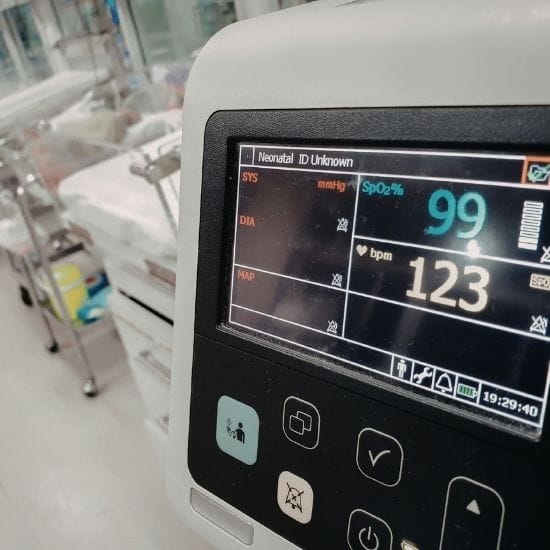
The US patient monitoring equipment market crossed $10 billion in 2025 and continues to grow.
From Medtronic’s dominance in remote monitoring to Baxter’s grip on blood pressure cuffs, the competitive landscape is shifting fast as AI, acquisitions, and supply chain pressures reshape who wins and who falls behind.
Here is a look at the top 7 US patient monitoring equipment companies driving the market right now, what they do best, and what is changing in 2025 and beyond.
Find growth niches in minutes, not months.
Explore quick, actionable insights from the select markets.
Table of Contents
➜ US Patient Monitoring Equipment Market Overview
➜ How Is AI Changing Patient Monitoring?
Key Takeaways
- The US patient monitoring equipment market was valued at over $10 billion in 2025 and is forecast to reach over $13 billion, growing at a CAGR of 3.7%.
- Medtronic holds the largest overall market share, leading in remote patient monitoring, cerebral oximetry, and pulse oximetry.
- Philips Healthcare leads multi-parameter vital signs and wireless ambulatory telemetry monitoring.
- AI integration is accelerating across telemetry, neurological monitoring, and remote patient monitoring platforms.
- Supply chain disruptions and tariff pressures affected companies like GE HealthCare and Baxter International in 2025.
- A planned $9.9 billion Danaher acquisition of Masimo signals major consolidation ahead.
US Patient Monitoring Equipment Market Overview
The US patient monitoring equipment market was valued at over $10 billion in 2025. It is expected to grow at a compound annual growth rate (CAGR) of 3.7%, reaching over $13 billion by the end of the forecast period.
This market covers a wide range of device categories, including multi-parameter vital signs monitors, wireless ambulatory telemetry, remote patient monitoring systems, pulse oximetry, fetal and neonatal monitors, ECG monitors, cerebral oximetry, blood pressure monitors, and cardiac output monitoring devices.
Growth is being driven by an aging population, rising prevalence of chronic conditions, hospital staffing pressures, and a steady push toward remote and AI-enabled care delivery. The US patient monitoring equipment market report from iData Research tracks over 140 companies across all major segments.
1. Medtronic: Largest Share of the US Patient Monitoring Equipment Market
Medtronic represented the largest share of the total US patient monitoring equipment market in 2025. The company leads across three major segments: remote patient monitoring, cerebral oximetry, and pulse oximetry.
In remote patient monitoring, Medtronic’s long-standing partnership with the Veterans Health Administration’s Care Coordination Home Telehealth (CCHT) program has been a key driver of its position. After Bosch Healthcare exited the market, Medtronic captured additional share and has continued to build on it.
For cardiac monitoring, its CareLink Network transmits data from implanted devices to a secured platform accessible by authorized clinicians. The SureScan family of CRT-D, ICD, and pacing devices adds MR-conditional capability, meaning patients can safely undergo full-body MRI while keeping their device connected to the CareLink Network.
In diabetes management, the MiniMed series includes the Guardian continuous glucose monitoring system and works with CareLink Personal software, which patients can access from any internet connection thanks to wireless pairing with compatible glucose meters.
On the cerebral oximetry side, Medtronic’s INVOS 7100 platform replaced the discontinued INVOS 5100C at the end of 2024. Medtronic also leads the pulse oximetry market through its Nellcor product line and OxiMax technology, a position solidified by its 2015 acquisition of Covidien.
In 2025, Medtronic expanded its portfolio further with the BIS Advance monitor for EEG-based depth-of-anesthesia monitoring and signed a US distribution agreement for the Argos cardiac output monitor.
Looking ahead, Danaher announced plans to acquire Masimo in a deal valued at approximately $9.9 billion, expected to close in the second half of 2026 pending regulatory approval. This consolidation will intensify competition in noninvasive monitoring, a space where Medtronic already holds a dominant position.
2. Philips Healthcare: Leader in Multi-Parameter and Telemetry Monitoring
Philips Healthcare held the second-largest share of the US patient monitoring equipment market in 2025, with leadership positions in multi-parameter vital signs monitoring and wireless ambulatory telemetry.
Its IntelliVue and SureSigns product lines serve a wide range of acuity levels, from compact bedside monitors to high-acuity systems. These connect to the PIIC iX central monitoring station, which delivers real-time monitoring, clinical decision support tools, and enhanced alarm management through the CareEvent mobile application.
In wireless telemetry, Philips operates on a Common Wireless Infrastructure that supports both telemetry and wireless bedside devices on a single network. The IntelliVue MX40 wearable monitor allows continuous ECG, SpO2, and vital signs monitoring for ambulatory patients while maintaining connectivity to the central station.
Philips also holds a significant position in remote patient monitoring through its eCareCompanion platform, which connects via cellular or Wi-Fi to deliver cloud-based monitoring services. Care teams manage patient data and communication through the eCareCoordinator software.
In fetal monitoring, Philips leads with its Avalon fetal monitoring product line. In 2025, the company received FDA clearance for the IntelliVue 6100, 6300, and 6500 patient monitors and launched a smart telemetry platform with a redesigned wearable monitor and continuous connectivity beyond the bedside.
3. Masimo: Second in Pulse Oximetry With a Major Acquisition on the Horizon
Masimo held the second-largest position in the US pulse oximetry market in 2025 and continues to differentiate through its signal extraction technology platform.
Its Rainbow Pulse CO-Oximetry technology goes beyond standard SpO2 measurement, enabling noninvasive monitoring of hemoglobin (SpHb), fluid responsiveness (PVI), and respiration rate. These parameters were previously only available through invasive testing.
Masimo has expanded its platform through strategic OEM partnerships. In 2019, it integrated its SET pulse oximetry platform with Mindray’s BeneVision N and BeneView T monitors. A similar agreement followed in 2021 with Spacelabs Healthcare.
Key 2025 developments include FDA 510(k) clearance for expanded delta hemoglobin parameters for the Masimo O3 Regional Oximetry system and new clinical evidence supporting SedLine brain function monitoring in pediatric anesthesia. The Masimo W1 Medical Watch also received FDA clearance in 2024 for connectivity with the Masimo SafetyNet telemonitoring system.
In 2026, Danaher announced plans to acquire Masimo in a transaction valued at approximately $9.9 billion. The deal is pending regulatory approval and is expected to close in the second half of 2026.
4. GE HealthCare: Leader in ECG and Fetal Monitoring
GE HealthCare ranked as the third-largest competitor in the total US patient monitoring equipment market in 2025, with strong positions in multi-parameter vital signs, ECG monitoring, fetal and neonatal monitoring, and blood pressure monitoring.
GE’s CARESCAPE B series patient monitors connect to CARESCAPE central stations and mobile viewers, with the VC150 providing flexible spot-check or continuous monitoring across adult, pediatric, and neonatal patients. The Unity Network Interface Device enables wireless connectivity for standalone monitors within the CARESCAPE network.
GE led the ECG monitoring market in 2025. Its MAC resting ECG product line accounts for roughly half of the resting ECG installed base in the US, and its MUSE cardiology information system provides a data management advantage, particularly in larger hospital facilities with existing HIS and PACS integrations.
In fetal monitoring, GE’s Corometrics product line has been in clinical use for three decades. Its October 2025 launch of CareIntellect for Perinatal brought a cloud-first application that consolidates maternal and fetal data, including uterine activity, fetal heart rate, blood pressure, and maternal SpO2, into a unified view.
In 2025, GE cited tariff-related pressures and elevated component costs affecting portions of its Patient Care Solutions business, which may have contributed to pricing pressure and slower replacement activity in mature categories like blood pressure monitoring.

5. Becton Dickinson: Entering Advanced Hemodynamic Monitoring
Becton Dickinson (BD) became a notable competitor in the US patient monitoring equipment market in 2025 following its acquisition of Edwards Lifesciences’ Critical Care product group in 2024.
This acquisition added the HemoSphere advanced hemodynamic monitoring platform, FloTrac sensors, Swan-Ganz pulmonary artery catheters, and the noninvasive ClearSight monitoring system to BD’s portfolio. It also strengthened the company’s presence in advanced oximetry monitoring.
BD continues to maintain a presence in the pulse oximetry market through sensor and monitoring products integrated across its broader critical care portfolio.
6. Honeywell Life Sciences: Chronic Disease Management in Remote Monitoring
Honeywell Life Sciences was a major competitor in the US remote patient monitoring market in 2025, with a particular focus on chronic disease management.
Its Genesis Touch v2 device supports 3G, 4G, and Wi-Fi connectivity, transmitting patient health metrics to the LifeStream Management Suite. The Genesis DM adds voice-enabled, disease-specific symptom management tools alongside LifeStream integration.
Honeywell supports a wide range of compatible peripherals and takes a platform approach designed to help patients transition between care settings. However, the company has moved to second place in the chronic disease management segment of remote patient monitoring as Medtronic’s VHA partnership and consistent share capture have widened the gap.
In 2025, Honeywell introduced the TrackWise Life Sciences Platform, targeting manufacturing, quality management, regulatory compliance, and post-market activities in the life sciences space.
7. Baxter International: Blood Pressure Cuff Market Leader
Baxter International ranked as the seventh-largest competitor in the US patient monitoring equipment market in 2025. Its market position is built primarily on the Welch Allyn brand, which holds a leading position in the professional blood pressure monitoring segment.
Welch Allyn blood pressure cuffs account for a significant share of the US disposable blood pressure cuff market. However, 2024 brought a supply disruption after raw material import issues halted cuff production at its Tijuana, Mexico manufacturing facility. Hospitals were advised to implement cleaning and reuse protocols during the shortage.
By May 2025, Baxter announced that most Welch Allyn blood pressure cuffs had been removed from allocation following improvements in production output. Baxter expanded US-based manufacturing capacity and installed additional production equipment to reduce future supply chain risk.
Beyond blood pressure, Baxter serves the ECG market through its Welch Allyn CardioPerfect Workstation, Quinton Q-Stress stress system, and Connex Cardio ECG, primarily targeting physician offices and clinics rather than large hospital systems.
How Is AI Changing the Patient Monitoring Equipment Market?
AI is becoming a defining factor in the US patient monitoring equipment market. Healthcare providers are adopting AI-enabled monitoring technologies to improve clinical efficiency, automate data interpretation, and detect patient deterioration earlier.
AI applications are now being integrated across telemetry, neurological monitoring, remote patient monitoring, and multi-parameter monitoring platforms. Key use cases include predictive analytics, alarm management, workflow optimization, and automated clinical decision support.
Hospital staffing shortages are accelerating adoption. As patient monitoring demands grow and clinical staff become stretched, AI-assisted tools offer a way to increase capacity without requiring proportional increases in headcount.
The FDA has been actively developing guidance to address this trend. In January 2025, the agency published draft guidance on AI-enabled device software functions, covering lifecycle management and marketing submission recommendations for AI-enabled medical devices (FDA, 2025).
GE HealthCare has positioned AI as a core part of its device strategy, including through its 2023 acquisitions of Caption Health, which develops AI for disease detection. Masimo’s SedLine brain function monitoring and Medtronic’s BIS Advance anesthesia monitor reflect similar moves toward AI-informed clinical monitoring.
For more on the remote monitoring segment, see iData Research’s overview of remote patient monitoring market trends.
Frequently Asked Questions
Who leads the US patient monitoring equipment market in 2025?
Medtronic held the largest share of the US patient monitoring equipment market in 2025, leading across remote patient monitoring, cerebral oximetry, and pulse oximetry. Philips Healthcare ranked second, and GE HealthCare ranked third.
How big is the US patient monitoring equipment market?
The US patient monitoring equipment market was valued at over $10 billion in 2025. It is projected to grow at a CAGR of 3.7% and reach over $13 billion by the end of the forecast period.
What companies compete in remote patient monitoring in the US?
The leading competitors in the US remote patient monitoring market in 2025 were Medtronic, Philips Healthcare, and Honeywell Life Sciences. Medtronic led the segment, supported by its long-standing partnership with the Veterans Health Administration’s CCHT program.
Is Masimo being acquired?
Yes. In 2026, Danaher announced plans to acquire Masimo in a transaction valued at approximately $9.9 billion. The deal is pending regulatory approvals and is expected to close during the second half of 2026.
How is AI being used in patient monitoring devices?
AI is being integrated into telemetry, remote monitoring, and multi-parameter monitoring platforms to support predictive analytics, automated alarm management, and clinical decision support. The FDA published draft guidance in January 2025 addressing AI-enabled device lifecycle management and marketing submissions.
What happened to Baxter’s blood pressure cuff supply in 2025?
In late 2024, Baxter experienced a supply disruption for its Welch Allyn blood pressure cuffs due to raw material import issues at its Tijuana facility. By May 2025, most product lines had been removed from allocation following expanded US-based manufacturing capacity and improved production output.
Turn market painpoints into opportunities
Explore how procedure trends and competitor positioning create clear openings for industry experts in the market.


