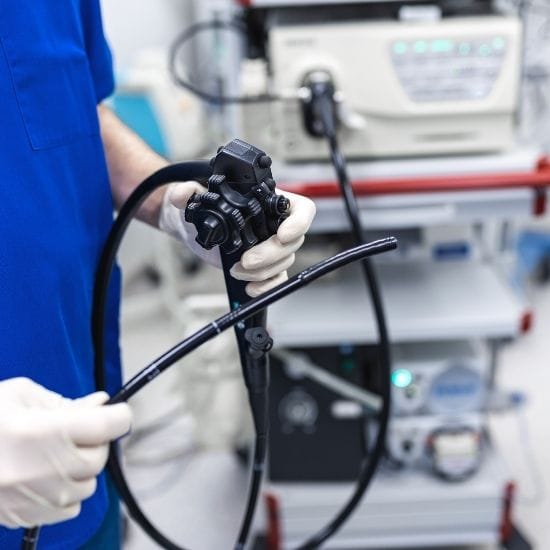
The top US Endoscope Market Trends in 2026 point to a market expanding from $3.16 billion in 2025 to a projected $4.7 billion — reflecting a 5.9% CAGR through the forecast period. But this growth is not evenly distributed. Certain segments are surging, buyer behavior is shifting, and the competitive divide between premium reusable systems and cost-efficient single-use devices is widening fast.
Find growth niches in minutes, not months.
Explore quick, actionable insights from the select markets.
Table of Contents
➜ Trend 1: GI Endoscopy Holds the Largest Market Share — But Growth Is Maturing
➜ Trend 2: Urology Is the Fastest-Growing Segment in the U.S. Endoscope Market
➜ Trend 3: Hysteroscopy Expansion Reflects the Broader Shift Toward Office-Based Care
➜ Trend 4: Laparoscopy, Arthroscopy, and ENT Are Evolving Through Targeted Innovation
➜ Trend 5: The Competitive Divide Between Premium and Cost-Efficient Is Widening
➜ How to Apply These Trends to Your Market Strategy
Key Takeaways
- Market size: Growing from $3.16B to $4.7B, offering long-term expansion opportunities
- Fastest growth: Urology and hysteroscopy — led by single-use device adoption
- Largest segment: GI endoscopy, anchored by high procedure volumes and reusable system dominance
- Competitive split: Premium imaging and integration vs. cost-driven, workflow-first solutions
- Strategic imperative: Companies must clearly align with one competitive path to win
Trend 1: GI Endoscopy Holds the Largest Market Share — But Growth Is Maturing
The table below summarizes where each major segment sits across the key US Endoscope Market Trends — size, growth rate, and leading competitors.
| Segment | Market Size | Growth Rate | Key Player |
|
GI Endoscopy |
Largest |
Moderate |
Olympus Corporation |
| Urology | Fast | Fastest | Boston Scientific |
| Hysteroscopy | Growing | High | Multiple |
| Laparoscopy | Established | Steady | Multiple |
| Arthroscopy / ENT | Mature | Moderate | Ambu A/S |
| Source: iData Research, US Endoscope Market Report 2026 | |||
Trend 1: GI Endoscopy Holds the Largest Market Share — But Growth Is Maturing
Among all US Endoscope Market Trends in 2026, the dominance of gastrointestinal endoscopy is the most established. Screening colonoscopies, upper GI diagnostics, and advanced therapeutic procedures generate consistent, high-volume procedure demand across hospitals and ambulatory surgery centers.
Olympus Corporation maintains a commanding position in this space, backed by its deep integration into hospital workflows, a strong reusable device portfolio, and longstanding clinical relationships. Its leadership is reinforced by high procedure volumes and reliable replacement cycles — key revenue drivers in a market built on service and longevity.
Single-use GI endoscopes are gaining attention, particularly in infection-control-sensitive environments. However, the economics and clinical inertia around premium reusable systems continue to slow widespread adoption in GI. This dynamic keeps growth steady — but not explosive.
Strategic Insight: GI endoscopy is the most stable revenue foundation in the market. Companies competing here must invest in service excellence, workflow integration, and incremental imaging innovation — not just new product launches. Learn more in the iData Research US GI Endoscopy Market Report.
Trend 2: Urology Is the Fastest-Growing Segment in the U.S. Endoscope Market
Urology stands out as the single most important growth-driven segment across current US Endoscope Market Trends. Demand for flexible and single-use ureteroscopes is accelerating, driven by rising rates of kidney stone procedures and a strong shift toward outpatient urological care.
Boston Scientific has positioned itself as a clear beneficiary of this shift. Its single-use ureteroscope portfolio aligns precisely with where demand is headed: facilities that prioritize efficiency, reduced reprocessing burden, and consistent device performance across every case.
Beyond ureteroscopy, continued growth in cystoscopy procedures — particularly in office-based and ambulatory settings — is sustaining the urology segment’s upward trajectory. The combination of high procedure frequency and growing single-use adoption creates a compounding growth effect.
Strategic Insight: If your company is evaluating high-growth entry points, urology offers one of the strongest risk-adjusted opportunities. Single-use device demand here is not a trend — it is the new standard. Research on single-use ureteroscope adoption continues to support this shift.
Trend 3: Hysteroscopy Expansion Reflects the Broader Shift Toward Office-Based Care
Hysteroscopy is one of the fastest-growing niche segments across US Endoscope Market Trends in 2026. The growth is being shaped by three converging forces:
- Increased adoption of single-use hysteroscopes that eliminate reprocessing
- A broader migration of gynecological procedures from hospitals to office-based settings
- Demand for simpler, faster diagnostic workflows that reduce patient wait times
Together, these factors are making hysteroscopy both more accessible and more scalable. The office-based care model is particularly powerful because it lowers overhead, shortens scheduling windows, and reduces the administrative complexity of hospital scheduling.
This segment does not yet have a dominant single player. That creates an opening — particularly for companies willing to invest in purpose-built, simplified hysteroscope systems designed for the office setting rather than retrofitting hospital-grade devices.
Trend 4: Laparoscopy, Arthroscopy, and ENT Are Evolving Through Targeted Innovation
Laparoscopy continues to benefit from the broader growth in minimally invasive surgery. According to a 2024 study published through the National Institutes of Health (NIH), outpatient surgical volume in the U.S. is projected to grow 18% by 2033 — a structural tailwind that directly supports sustained laparoscopy demand. Premium imaging and visualization systems command strong pricing power and remain central to surgical planning and robotic-assisted procedures.
Premium imaging and visualization systems command strong pricing power and remain central to surgical planning and robotic-assisted procedures.
Arthroscopy is still dominated by reusable rigid scopes, but single-use options are making incremental inroads. The disruption here is slower than in urology or hysteroscopy, but it is directionally consistent. Companies that build early share in single-use arthroscopy are positioning for longer-term structural growth.
ENT visualization is a slower-growth segment overall, but single-use bronchoscopes and rhino-laryngoscopes are expanding at a meaningfully faster rate than the rest of the segment. Ambu A/S has carved a distinctive position here, demonstrating that a focused single-use strategy can generate significant share even without a broad portfolio.
Strategic Insight: Slower-growing segments are not opportunity-free. They reward targeted innovation. A company that owns a specific niche — like Ambu in single-use ENT — can build defensible revenue without competing across the entire market.

Trend 5: The Competitive Divide Between Premium and Cost-Efficient Is Widening
Perhaps the most structurally important of all US Endoscope Market Trends in 2026 is the widening gap between two distinct competitive strategies:
- Premium reusable systems: Advanced imaging, hospital integration, long-term service contracts
- Cost-efficient solutions: Single-use devices, refurbished equipment, lower upfront cost, reduced reprocessing burden
These two paths are diverging — and companies that try to straddle both without clear positioning risk losing to specialists on either side. Buyers are increasingly making procurement decisions based not just on clinical performance, but on total cost of ownership, workflow fit, and supply consistency.
The companies winning in this market have made a clear choice. Olympus dominates the premium reusable space in GI. Boston Scientific has leaned fully into single-use in urology. Ambu built its entire model around single-use ENT and respiratory. Each has succeeded by committing — not hedging.
Companies evaluating their positioning in 2026 should ask: which buyer are we built for? The answer to that question should drive product development, pricing, sales enablement, and go-to-market investment.
How to Apply These U.S. Endoscope Market Trends to Your Strategy
The US Endoscope Market Trends of 2026 reward clarity and decisiveness. Here are the key strategic moves aligned with the trends above:
- Invest in premium imaging and integration for large IDNs and hospital systems competing in GI and laparoscopy
- Prioritize single-use device development in urology and ENT, where the demand shift is structural — not cyclical
- Target the office-based care channel for hysteroscopy growth, where simplicity and speed are the primary value drivers
- Maintain strong service and replacement revenue in mature segments like GI, where volume consistency creates reliable income
- Choose your competitive identity explicitly — premium or cost-efficient — and build your portfolio around it
For complete procedure volume forecasts, competitor market share data, segment-level projections, and strategic analysis, see the iData Research US Endoscope Market Report.
Frequently Asked Questions
What is the US endoscope market size in 2026?
The US endoscope market reached $3.16 billion in 2025 and is projected to grow to $4.7 billion, supported by a 5.9% CAGR. Growth is driven by rising procedure volumes, expanding outpatient care settings, and strong adoption of single-use endoscope technologies.
Which endoscope segment is growing the fastest in the US?
Urology is the fastest-growing segment in the US endoscope market in 2026, driven by rising demand for single-use ureteroscopes and increased cystoscopy procedure volumes. Hysteroscopy is the second-fastest-growing segment, fueled by the shift to office-based gynecological procedures.
Why are single-use endoscopes gaining popularity?
Single-use endoscopes eliminate the reprocessing requirements of reusable devices, reducing contamination risk, simplifying workflow, and cutting the overhead associated with sterilization infrastructure. According to the CDC Guideline for Disinfection and Sterilization in Healthcare Facilities (2024), reprocessing deficiencies in flexible endoscopes remain a persistent patient safety concern — reinforcing why single-use adoption is accelerating in high-throughput outpatient and office-based settings.
Why does GI endoscopy remain the largest segment?
GI endoscopy generates higher procedure volumes than any other segment in the market. Colonoscopy screening programs, upper GI diagnostics, and therapeutic procedures create consistent, recurring demand. Reusable systems from leading manufacturers like Olympus continue to dominate due to their deep hospital integration.
How are companies competing in the US endoscope market?
Competition is splitting into two clear strategies: premium manufacturers invest in advanced imaging, AI-assisted visualization, and integrated hospital systems; cost-focused competitors win on price, workflow efficiency, and single-use convenience. Companies that fail to clearly align with one strategy risk losing ground to specialists on either side.
What is driving growth in the US endoscope market overall?
Growth is driven by an aging population, rising rates of chronic conditions requiring endoscopic monitoring, increasing adoption of minimally invasive surgery, and the structural shift toward outpatient and ambulatory care settings. Single-use device innovation is an additional accelerant, particularly in urology, hysteroscopy, and ENT.
Turn market painpoints into opportunities
Explore how procedure trends and competitor positioning create clear openings for industry experts in the market.


