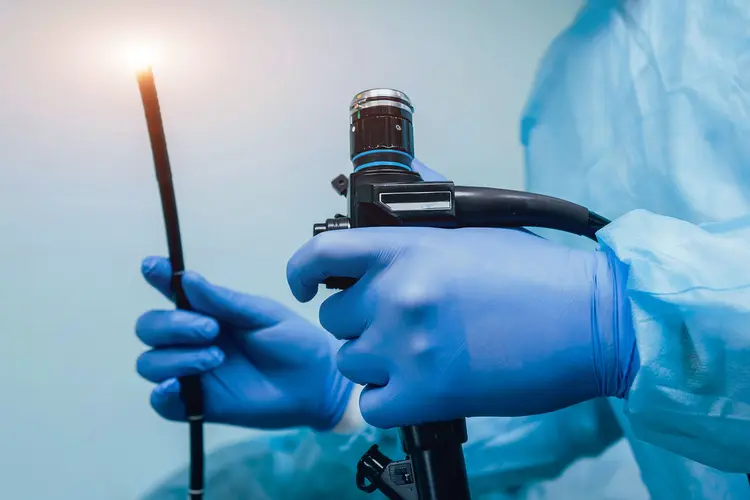
Reusable endoscopes are winning the mature, high-volume segments while single-use endoscopes are winning the growth, and iData Research ranks Olympus first, Boston Scientific second and Ambu third across the total U.S. single-use and reusable endoscope market, valued at $3.16 billion in 2025 and growing at a CAGR of 5.9%.
iData Research values the U.S. single-use and reusable endoscope market at $3.16 billion in 2025, rising at a CAGR of 5.9% to reach $4.7 billion.
This guide explains which side is actually ahead in 2026 and which companies lead each one.
Find growth niches in minutes, not months.
Explore quick, actionable insights from the select markets.
Key Takeaways
- Neither side has won. Reusable scopes still hold the larger installed base, while single-use endoscopes supply most of the growth.
- iData Research ranks Olympus first, Boston Scientific second and Ambu third across the total U.S. market in 2025.
- Single-use-focused companies now lead urology, ENT visualization and gynecological endoscopy.
- Reusable-heavy portfolios still lead GI endoscopy, arthroscopy and laparoscopy.
- Published cost evidence is mixed, which is why hybrid reusable-disposable platforms are gaining ground.
Table of Contents
➜ Which is winning in 2026, single-use endoscopes or reusable ones
➜ Why Olympus still leads the reusable endoscope market
➜ Why Boston Scientific leads in single-use endoscopes
➜ What makes Ambu a leader in single-use endoscopes
➜ How big is the single-use endoscopes and reusable scope market
➜ Single-use endoscopes: frequently asked questions
Which is winning in 2026, single-use endoscopes or reusable ones?
Neither side has won outright in 2026, because reusable scopes still hold the larger installed base while single-use endoscopes supply most of the growth, and iData Research ranks Olympus first, Boston Scientific second and Ambu third across the total U.S. single-use and reusable endoscope market, valued at $3.16 billion in 2025.
The clearest signal is who leads each segment.
Reusable-heavy portfolios lead the three most established categories: Olympus in gastrointestinal endoscopes, followed by Fujifilm and STERIS, Stryker in arthroscopes, followed by Trice Medical and Arthrex, and Stryker again in laparoscopes, followed by Karl Storz and Olympus.
Companies built around disposable devices lead the other three: Boston Scientific in urological endoscopes, followed by Olympus and Ambu, Verathon in ENT visualization, followed by Olympus and Karl Storz, and Aveta in gynecological endoscopes, followed by Olympus and Stryker.
Read together, the ranking says single-use endoscopes are winning the newer, faster-turnover procedure settings, while reusable systems keep the high-volume categories where imaging quality and installed capital still decide purchases.
Why Olympus still leads the reusable endoscope market
Olympus holds the leading position across the total U.S. endoscope and visualization market, according to iData Research.
Its strength is breadth rather than any single product, with dominant or leading shares in several of the largest reusable categories, including GI endoscopes and reusable hysteroscopy, plus strong positions in laparoscopic visualization.
Olympus is not standing still on disposables either.
In September 2025 the company announced an exclusive global distribution agreement with MacroLux Medical covering single-use cystoscopes, ureteroscopes and suction access sheaths across the United States, Canada, Europe and Asia Pacific.
That deal is a good illustration of how the reusable leader is defending its installed base while adding disposable options alongside it.
Why Boston Scientific leads in single-use endoscopes
Boston Scientific ranks second overall in the U.S. market, and iData Research attributes that position almost entirely to disposable, procedure-specific categories rather than broad reusable visualization lines.
The company leads single-use GI endoscopy, including duodenoscopy and pancreaticobiliary visualization, and holds a strong position in the rapidly expanding single-use ureteroscope market.
Its endoscopy portfolio includes the EXALT Model D single-use duodenoscope, the SpyGlass DS single-operator digital cholangioscope and the LithoVue line of single-use ureteroscopes.
Of the three leaders, Boston Scientific is the one most exposed to the shift toward single-use endoscopes, which cuts both ways as pricing pressure builds in disposables.
What makes Ambu a leader in single-use endoscopes
Ambu ranks third overall in the U.S. market despite carrying a narrower portfolio than Olympus or Boston Scientific.
iData Research credits that position to concentration rather than breadth, specifically single-use bronchoscopy, single-use rhino-laryngoscopy and a growing presence in single-use GI endoscopy.
The company keeps pushing into new disposable niches.
In June 2025 Ambu received FDA 510(k) clearance for the aScope 5 Cysto HD, the first single-use flexible cysto-nephroscope cleared in the United States for percutaneous nephrolithotomy.
Ambu is the clearest example of how a pure-play disposables strategy can win a top-three position without a reusable installed base.
How big is the single-use endoscopes and reusable scope market?
iData Research values the combined U.S. single-use and reusable endoscope market at $3.16 billion in 2025, forecast to grow at a CAGR of 5.9% and reach $4.7 billion by 2032.
Growth is driven by rising procedure volumes, an aging population, expanding cancer screening and the continued shift toward minimally invasive care, particularly in GI, urology and gynecology.
The main brake is capital and budget pressure, which is sharpest in ambulatory surgical centers where purchasing stays highly price sensitive and refurbished equipment remains attractive.
Cost evidence is genuinely unsettled, which slows a full switch.
A 2025 systematic review in Endoscopy International Open found that per-procedure cost was higher for single-use endoscopes in every study reviewed, yet three of the five cost-utility analyses still concluded single-use was more cost-effective once infection risk was priced in.
A separate 2025 review of endoscopy accessory economics reached a similar verdict, noting that environmental impact is rarely costed at all.
That ambiguity explains the third trend iData Research flags for 2026: hybrid reusable-disposable platform models that pair reusable capital with disposable, procedure-specific components, now appearing across GI endoscopy, hysteroscopy and laryngoscopy.
For a closer look at how disposables reshaped one segment, see our analysis of single-use endoscope growth in urological endoscopy.
Single-use endoscopes: frequently asked questions
Are single-use endoscopes cheaper than reusable endoscopes?
Not on a per-procedure basis. Every study in the 2025 Endoscopy International Open review reported a higher per-procedure cost for single-use devices, though several found them more cost-effective overall once infection risk and reprocessing burden were included.
Do single-use endoscopes reduce infection risk?
Reducing cross-contamination is the main reason they were adopted, since a sterile device removes reprocessing from the equation entirely. Published economic models commonly build in a lower infection risk, but the size of that benefit varies by study and procedure.
Which company leads the single-use endoscopes market?
Boston Scientific leads single-use GI endoscopy and holds a strong position in single-use ureteroscopes, while Ambu leads single-use bronchoscopy and rhino-laryngoscopy, based on iData Research 2025 U.S. market share data.
Will single-use endoscopes replace reusable endoscopes?
Not across the board in the near term. Reusable systems remain well established in higher-volume procedures where image quality, handling and existing capital investment still drive purchasing decisions.
Which endoscope segments are shifting fastest to disposables?
Adoption is strongest where contamination concerns and procedure turnover matter most, particularly ureteroscopy, hysteroscopy, bronchoscopy and pancreaticobiliary endoscopy.
Full segment-level market sizing, unit sales, average selling prices and competitor shares are available in the iData Research U.S. Single-Use and Reusable Endoscope Market report, second edition published May 2026.
Turn market painpoints into opportunities
Explore how procedure trends and competitor positioning create clear openings for industry experts in the market.


