Spine Endoscope Technology is a growing area of interest in orthopedics. Hospitals and surgeons are under pressure to work more efficiently, see more patients, and deliver better results. Spine endoscope technology, tiny cameras and tools that allow surgeons to operate through very small openings, is helping make that possible.
In this blog we will cover why more surgeons are choosing this technology and how that decision impacts patient care, hospital efficiency, and revenue.
Find growth niches in minutes, not months.
Explore quick, actionable insights from the select markets.
Table of Contents
➜ Why Spine Endoscopes Are in High Demand
➜ The rise of advanced imaging in spine endoscope technology
➜ Expanding techniques in endoscopic spine surgery
➜ Market leaders shaping spine endoscope technology in 2025
➜ Why Spine Endoscope Technology Matters
Key Takeaways
- Surgeons can often perform more surgeries in less time with spine endoscopes compared to traditional open methods.
- Patients benefit from smaller incisions, faster recovery, and less pain after surgery.
- Asia-Pacific leads the world in procedure numbers, with North America close behind.
- The technology is moving toward sharper 4K imaging, better tools, and smoother workflows.
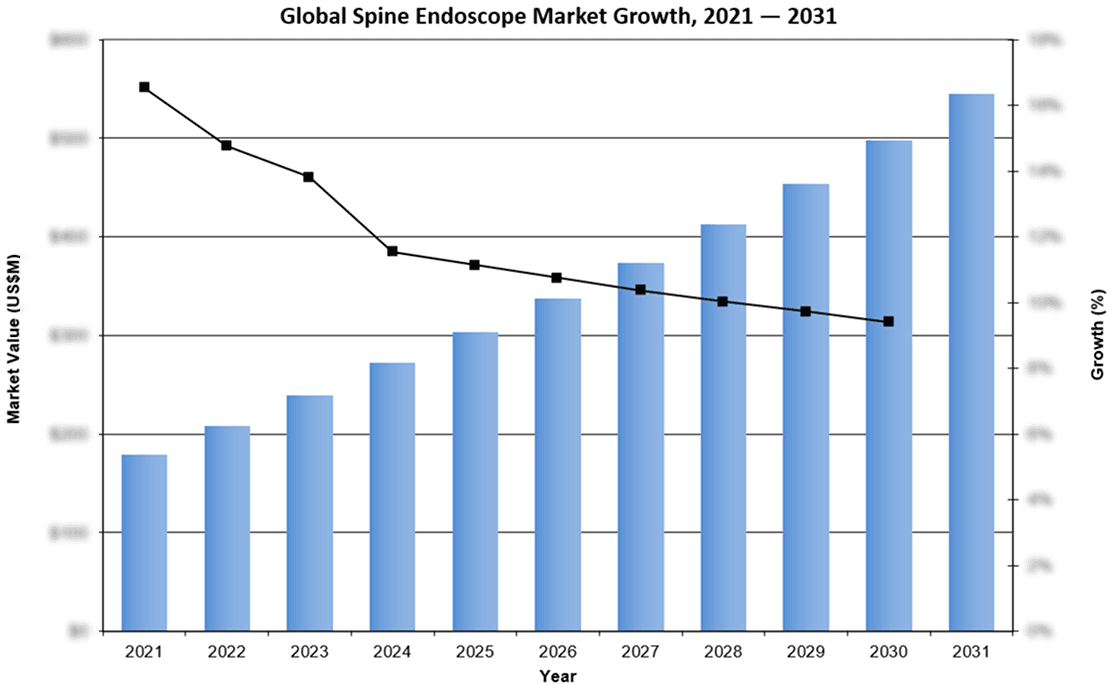
- The market will keep growing, but the fastest gains are happening now, as more hospitals adopt these systems.
Why Spine Endoscopes Are in High Demand
Implant designs now favor pre-contoured shapes and guided instrumentation, helping surgeons deliver consistent outcomes.
📌 Learn More About the Global Spine Endoscope Market:
In healthcare, time directly impacts both patient care and business outcomes. Endoscopic spine procedures often require less time in the operating room compared to traditional open surgeries. Shorter surgeries mean less anesthesia for the patient and the potential for a quicker recovery.
For hospitals and surgical centers, it means the opportunity to perform more cases in the same day, increasing overall productivity.
Surgeons see value in being able to help more patients without extending their work hours. This efficiency also supports the growing trend of moving spine procedures into outpatient or same-day surgery centers.
More Patients, Less Time
- Reducing procedure time creates financial savings.
- Shorter hospital stays free up beds and resources for other patients.
- Endoscopic surgery techniques can help more patients get treated in less time.
The rise of advanced imaging in spine endoscope technology
One of the biggest improvements in spine endoscopes in 2025 is image quality. High-definition and 4K systems give surgeons a much clearer view of the spine’s delicate structures.
This means they can perform surgery with greater precision, making it easier to avoid damaging healthy tissue.
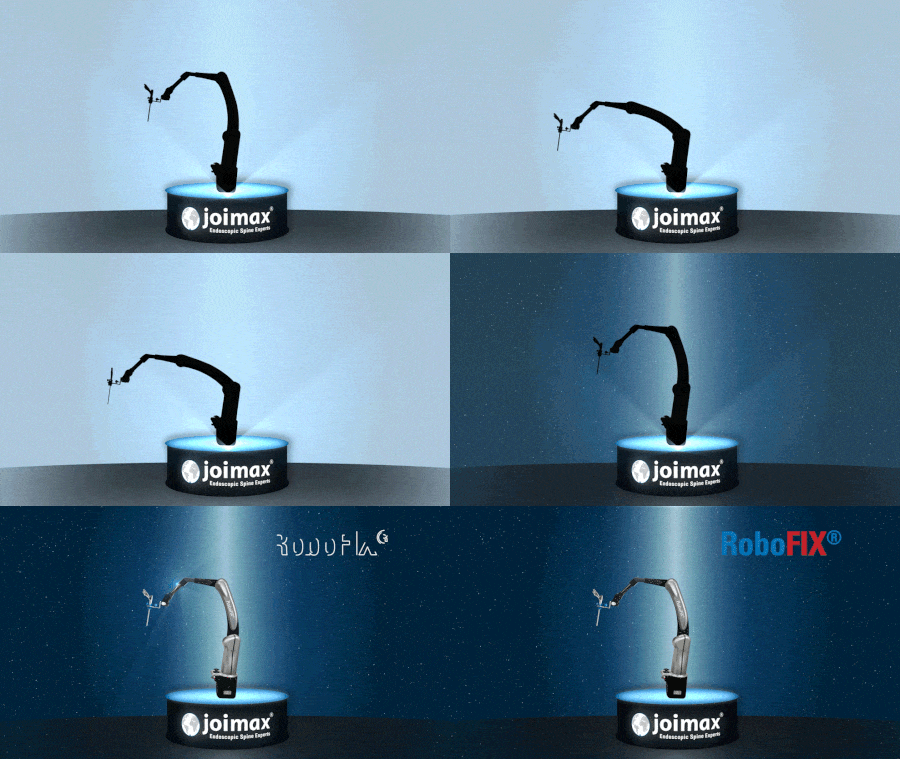
Companies like joimax® now offer full imaging systems with integrated lighting, cameras, and monitors that connect seamlessly in the operating room.
In training situations, a clear view of the surgical area allows instructors to point out details that might be missed on older systems.
For hospitals, upgrading to advanced imaging systems can also be a marketing advantage. Patients are more likely to choose a facility that advertises the latest technology, especially when it is connected to shorter recovery times and better outcomes.

Expanding techniques in endoscopic spine surgery
Endoscopic spine surgery is not just one procedure. There are several techniques, each suited for different spinal conditions. The most common ones are:
- Transforaminal and interlaminar approaches, which are often used for herniated discs and spinal stenosis.
- Biportal endoscopy, which uses two small entry points, one for the camera and one for the surgical instruments.
Biportal endoscopy is gaining popularity because it gives surgeons more room to work and can feel more familiar to those trained in traditional methods. However, like any new skill, it comes with a learning curve.
Surgeons typically become comfortable after performing several dozen procedures, but the investment in training pays off through improved efficiency and outcomes.
Less Invasive and Better Outcomes
These expanded techniques allow surgeons to treat more types of spinal problems with less invasive methods. As more doctors are trained in these approaches, patient access to minimally invasive spine surgery will continue to grow.
Market leaders shaping spine endoscope technology in 2025
Several companies are leading the global market for spine endoscopes.

Joimax® is a top player, offering systems for different spinal regions, including TESSYS® for transforaminal access, iLESSYS® for interlaminar access, and CESSYS® for cervical procedures. They also provide advanced 4K imaging and integrated operating room solutions.

Richard Wolf offers the VERTEBRIS® line of systems for lumbar, cervical, and other spine procedures, along with precision instruments and advanced RF tools.

Shanghai Kinetic, which includes the Elliquence brand, focuses on radiofrequency systems like Surgi-Max® and Trigger-Flex®, which are widely used for endoscopic spine work.
Knowing which companies lead the market and what products they offer is valuable for hospitals, clinics, and investors.
It helps decision-makers choose technology partners that are proven and have strong support systems for training and maintenance.
Why Spine Endoscope Technology Matters
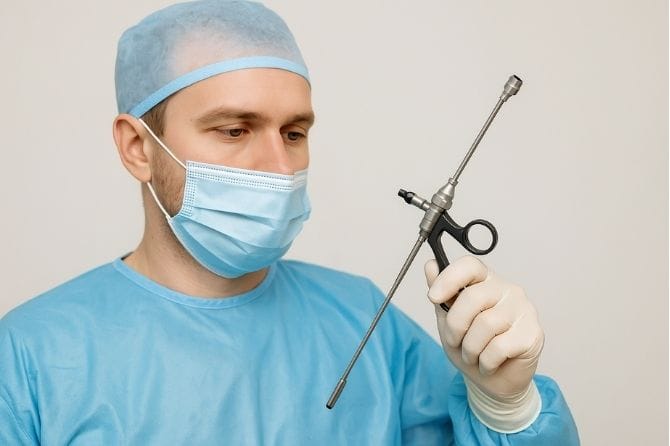
The growth of spine endoscope technology is reshaping the way spine surgery is performed around the world.
The benefits are clear – more efficient surgeries, faster recovery times, and a wider range of minimally invasive options. Surgeons can see more patients, hospitals can optimize their resources, and patients can return to their daily lives more quickly.
Turn market painpoints into opportunities
Explore how procedure trends and competitor positioning create clear openings for industry experts in the market.


